Supplements
Creatine for Women: What It Actually Does (and What It Doesn't)
It's one of the most studied supplements on earth, and the research on women is finally catching up. Here's what's real, what's hype, and how much to take.
If you've heard about creatine, you probably filed it under “stuff guys take at the gym.” Big tubs. Gym bros. Not for you.
That idea is outdated. Creatine is one of the most researched supplements we have, and a growing stack of studies looks at what it does for women specifically — for your muscles, maybe your brain and mood, and especially during the menopause years. Let's walk through what it actually is, what the evidence shows, and the myths worth letting go of. This is education, not medical advice — loop in your doctor or pharmacist before starting anything new, especially if you're pregnant, nursing, or have kidney concerns.
So what is creatine, really?
Creatine is a natural compound your body already makes, mostly in your liver and kidneys. You also get small amounts from food — mainly meat and fish. It's stored in your muscles (and a little in your brain), where it helps make quick bursts of energy.
Think of it as a tiny battery pack for your cells. When you lift something heavy or push through the last few reps, your cells burn through their fast energy in seconds. Creatine helps recharge it so you can do a little more.
Here's a detail that matters for women: research suggests women store about 70 to 80 percent less creatine than men, and tend to get less from food. Starting from a lower baseline, adding some through a supplement may make a real difference. According to PubMed, a 2021 review in Nutrients focused entirely on creatine and women's health lays this out (Smith-Ryan et al., 2021).
The strongest evidence: strength and muscle
This is where creatine has the most research behind it, and the news is good. When you pair it with strength training — weights, resistance bands, bodyweight moves — you tend to get more out of your workouts than training alone.
Creatine doesn't do the work for you. It helps you do a bit more, and that adds up over weeks and months into more strength and a little more muscle. A major review of nutrition for active women, from the International Society of Sports Nutrition, named creatine one of the few supplements with strong, reliable evidence in women (Sims et al., 2023).
Why care about muscle if you're not an athlete? Because it helps you carry groceries, climb stairs, keep your balance, and stay independent as you age — and it helps your body handle blood sugar. (Muscle also needs raw material, and our guide to protein for women covers that half.) Keeping it is one of the best things you can do for your long-term health, and creatine helps you get more from the effort you're already putting in.
The emerging story: brain and mood
Your brain is a serious energy hog, and just like your muscles, it uses creatine to help keep its energy steady. That's why researchers started asking whether creatine might support how you think and feel — not just how you move.
The early evidence is interesting, though still developing. A 2023 systematic review and meta-analysis (a study that pools results from many trials) found creatine improved measures of memory in healthy people, with the biggest boost in older adults aged 66 to 76 (Prokopidis et al., 2023). According to PubMed, the effect in younger adults was small — so it looks most promising later in life, or when your brain is under stress like poor sleep.
There's also early research hinting creatine may support mood, possibly by restoring the brain's energy balance; the women's-health review above discusses this too (Smith-Ryan et al., 2021). It's promising, but not settled. Creatine is not a treatment for depression or any mental health condition, and it's no substitute for professional care. If you're struggling with your mood, please talk to your doctor.
Menopause: where creatine gets especially interesting
The years around and after menopause bring real changes. As estrogen drops, many women lose muscle and bone more quickly, raising the risk of frailty and fractures down the road. (We walk through what actually changes in perimenopause separately.) This is exactly the stage where creatine — paired with strength training — may earn its place. We go deeper on doses and ages in our guide to creatine for women over 50.
A 2026 meta-analysis pulled together seven randomized trials in postmenopausal women and found small but meaningful gains in muscle mass and leg strength — but mainly when women took at least 5 grams a day and did resistance training. Lower doses without training showed no real effect (Naddafha et al., 2026).
That “with training” part is the whole ballgame, and it shows up again with bone. In a yearlong randomized trial, postmenopausal women who took creatine while doing supervised strength training preserved more bone density at the neck of the femur — a common fracture spot near the hip — than women who trained on a placebo (Chilibeck et al., 2015).
The honest flip side: creatine is not a bone pill you can swallow while skipping the gym. A two-year trial gave older women 3 grams a day without a training program, and it did not improve their bone health (Sales et al., 2020). The research is consistent — creatine is a partner to strength training, not a replacement for it. (Food matters for bone too; see what to eat in menopause to protect your bones.)
Let's bust three big myths
“Creatine will make me bulk up.”
It won't turn you into a bodybuilder. Building noticeable muscle takes years of hard training and a lot of food, and women's hormones make that kind of bulk especially hard to gain by accident. Creatine helps with lean muscle that makes you stronger. In the postmenopausal meta-analysis, the average muscle gain was under half a kilogram — real and helpful, not dramatic (Naddafha et al., 2026).
“Creatine causes bloating.”
This myth comes from old advice to “load” creatine with big 20-gram doses at the start, which could cause some short-term water retention. You don't need to do that — a steady 3 to 5 grams a day works well and skips the puffiness. And any water creatine draws in goes into your muscle cells, not under your skin, so it isn't the bloating people picture.
“Creatine is just for men.”
By now you can see this one doesn't hold up. Because women start with lower natural creatine stores, some researchers think women may actually have more to gain (Smith-Ryan et al., 2021). Most old studies used men simply because women were left out of the research — a gap the field is finally fixing.
The practical part: dose, form, and safety
How much? Most research uses about 3 to 5 grams a day, and the ISSN review on active women points to that same range (Sims et al., 2023). You don't have to “load” with big doses — taking your daily amount consistently fills your stores over a few weeks either way.
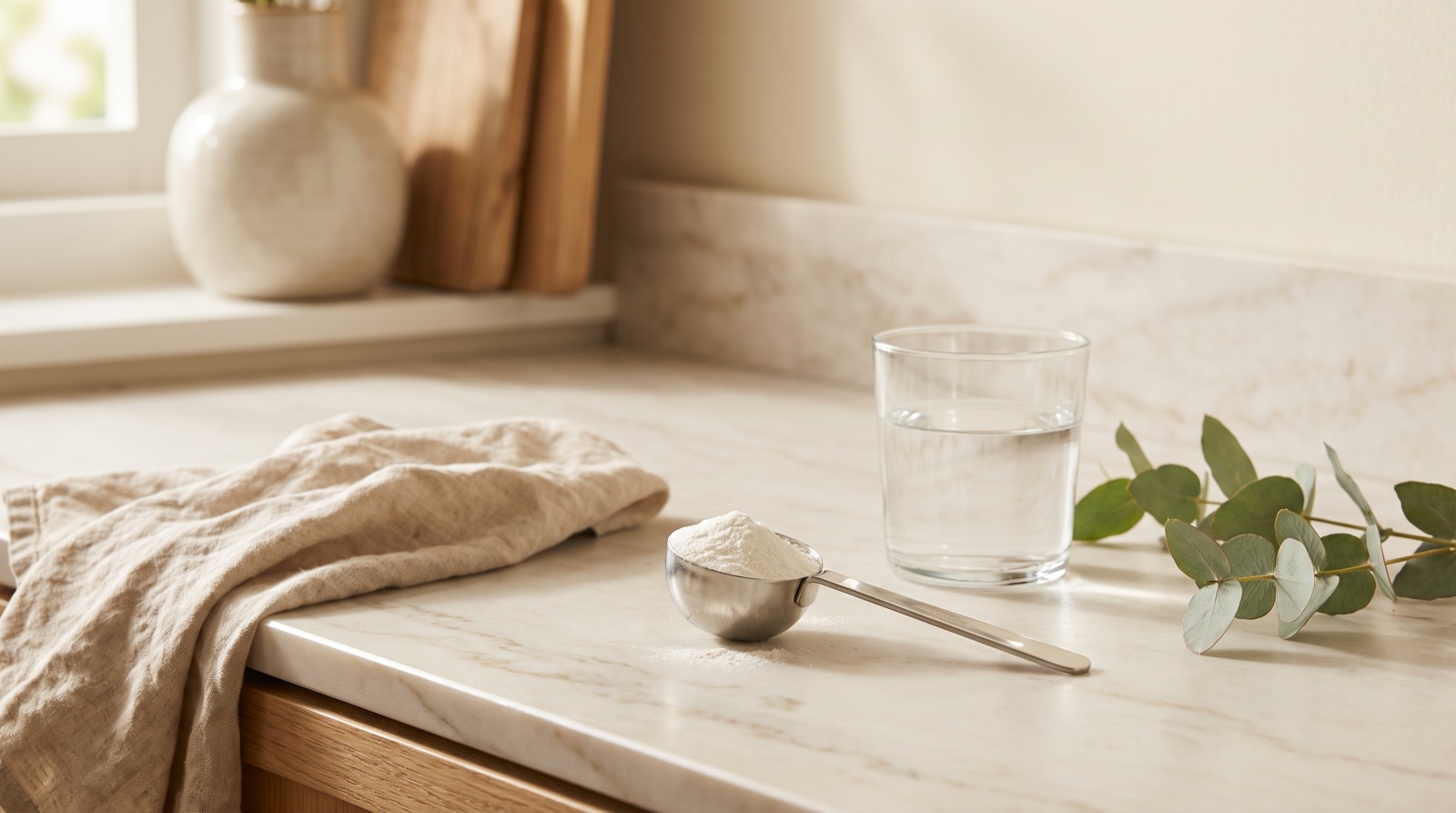
Which form? Look for plain creatine monohydrate. It's used in the vast majority of studies, it's well tested, and it's usually the cheapest. Fancier versions haven't been shown to work better, and we compare HCl, gummies, and the rest one by one in which creatine form is best for women. Timing barely matters, so take it whenever you'll remember — it mixes easily into water or a smoothie.
Is it safe? Creatine monohydrate has one of the strongest safety records of any supplement. According to PubMed, the ISSN's position stand concluded that short- and long-term use — up to 30 grams a day for as long as five years — is safe and well tolerated in healthy people, from children to older adults (Kreider et al., 2017). In the postmenopausal trials, side effects were mild, no more common than with placebo, and kidney markers stayed normal (Naddafha et al., 2026).
Still, “safe for most” isn't “safe for everyone.” If you have kidney disease or another ongoing condition, are pregnant or breastfeeding, or take regular medications, check with your doctor or pharmacist first. It's a quick conversation, and worth having.
The bottom line
Creatine isn't hype, and it isn't just for men. For women, it's a well-studied, low-cost, generally safe way to get more out of your strength training — with promising early signs for your brain, mood, and the menopause years on top.
It's not magic. It won't bulk you up, and it works best alongside your effort, not instead of it. But if you're lifting, walking, chasing kids, or simply trying to stay strong for the long haul, a daily 3-to-5-gram scoop of creatine monohydrate is one of the more evidence-backed choices out there. Have a word with your doctor, then decide what's right for you. (More women-first supplement guides live in our supplements section.)
References
- Smith-Ryan AE, Cabre HE, Eckerson JM, Candow DG. Creatine Supplementation in Women's Health: A Lifespan Perspective. Nutrients. 2021. PubMed
- Sims ST, Kerksick CM, Smith-Ryan AE, et al. International Society of Sports Nutrition position stand: nutritional concerns of the female athlete. J Int Soc Sports Nutr. 2023. PubMed
- Prokopidis K, Giannos P, Triantafyllidis KK, et al. Effects of creatine supplementation on memory in healthy individuals: a systematic review and meta-analysis of randomized controlled trials. Nutr Rev. 2023. PubMed
- Chilibeck PD, Candow DG, Landeryou T, Kaviani M, Paus-Jenssen L. Effects of Creatine and Resistance Training on Bone Health in Postmenopausal Women. Med Sci Sports Exerc. 2015. PubMed
- Naddafha S, Antonio J, Kreider RB, Stout JR. Creatine monohydrate for lean mass, strength, and bone density in postmenopausal women: a systematic review and meta-analysis. J Int Soc Sports Nutr. 2026. PubMed
- Sales LP, Pinto AJ, Rodrigues SF, et al. Creatine Supplementation (3 g/d) and Bone Health in Older Women: A 2-Year, Randomized, Placebo-Controlled Trial. J Gerontol A Biol Sci Med Sci. 2020. PubMed
- Kreider RB, Kalman DS, Antonio J, et al. International Society of Sports Nutrition position stand: safety and efficacy of creatine supplementation in exercise, sport, and medicine. J Int Soc Sports Nutr. 2017. PubMed
Common questions
How much creatine should a woman take?
Most research uses about 3 to 5 grams of creatine monohydrate a day. You don't need to do a high-dose “loading” phase — taking the same small amount consistently fills your muscle stores within a few weeks. Check with your doctor or pharmacist first if you're pregnant, nursing, take medications, or have a health condition.
Will creatine make me gain weight or look bulky?
Creatine won't make you bulky — that takes years of dedicated training and eating, and women's hormones make it very hard to gain that kind of muscle by accident. You might see the scale move up slightly at first as your muscles hold a bit more water inside their cells, which is normal and not fat. What creatine mainly supports is lean, functional strength.
Is creatine safe to take every day?
For healthy people, creatine monohydrate has one of the strongest safety records of any supplement, with research supporting daily use over the long term. Still, it isn't right for everyone. If you have kidney disease or another ongoing condition, are pregnant or breastfeeding, or take regular medications, talk to your doctor or pharmacist before starting.
Do I have to work out for creatine to help?
For muscle and bone benefits, mostly yes. The research is consistent that creatine works best paired with strength training — it helps you get more out of your workouts rather than replacing them. Studies that gave creatine without any training program generally didn't see bone or muscle benefits. Its possible brain and mood effects may be more separate from exercise, but that research is still early.
What kind of creatine is best?
Plain creatine monohydrate is the best kind of creatine. It's the form used in the vast majority of studies, it's well tested, and it's usually the cheapest. Pricier “advanced” forms haven't been shown to work any better, so you can skip them and just look for “creatine monohydrate” on the label.