Supplements
Best Protein Powder for Women Over 50: 5 Picks Compared (2026)
Five real protein powders scored on scoop size, protein quality, outside testing, tolerability and cost, plus what the trials say about whey, plant protein and collagen after 50.
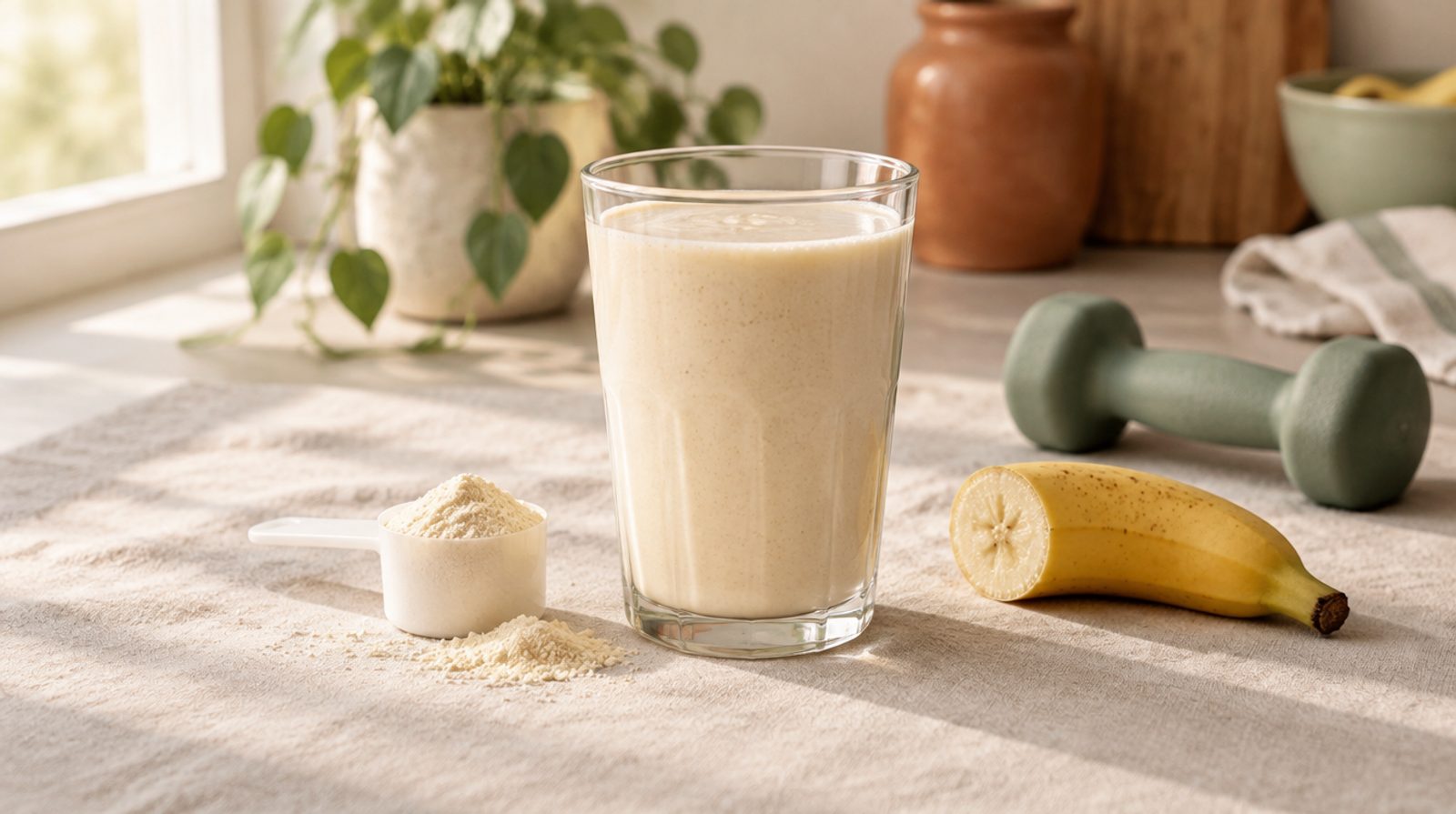
The best protein powder for women over 50 gives you about 25 to 30 grams of complete protein in one scoop, comes from whey or a well-blended plant source, and has its contents checked by an outside lab. On those terms, Transparent Labs 100% Grass-Fed Whey Protein Isolate is our top pick: 28 grams of whey isolate per scoop, very little lactose, and the lowest cost per 25 grams of protein in our comparison. If you avoid dairy, Garden of Life Sport Organic Plant-Based Protein is the best plant option, with 30 grams per scoop and NSF Certified for Sport testing.
Protein powder is not magic, and it works best alongside strength training. In a review of trials in women over 55, whey protein raised leg muscle and arm strength only when it was paired with resistance training; without training it made no difference to muscle or strength (Kuo, 2022). A powder is simply an easy way to reach a protein target that gets harder to hit, and more important, after 50.
Why protein needs change after 50
Women over 50 need more protein per meal than younger adults to switch on muscle building, because aging muscle responds less to small amounts. In a pooled analysis of lab studies, older men needed about 0.4 grams of protein per kilogram of body weight in one sitting to reach the full muscle-building response, close to double the 0.24 grams younger men needed (Moore, 2015). That study was in men, so the exact figure for women is less certain, but it is a useful guide. For a woman who weighs 150 pounds (68 kg), 0.4 g/kg works out to about 27 grams of protein in a meal.
An expert group on protein in older adults recommends at least 1.0 to 1.2 grams of protein per kilogram of body weight per day for people over 65, and 1.2 grams or more for those who exercise (Bauer, 2013). Many women in their 50s and 60s eat well below that, especially at breakfast. Our guide to how much protein women need each day walks through the daily target and easy food sources.
This is the real job of a protein powder after 50: topping up one or two meals so each reaches roughly 25 to 30 grams. It is the main reason we put scoop size at the top of our criteria.
How we compared protein powders for women over 50
We scored each powder from 1 to 5 on five things you can check yourself, for a total out of 25.
- Protein per scoop. Does one normal scoop reach about 25 to 30 grams, the per-meal amount older adults need?
- Protein quality and evidence. Is it a complete protein with human trials behind its type (whey, or pea and other plant blends)?
- Independent testing. Is there a named outside certification, such as NSF Certified for Sport or Informed Sport, that checks the label and screens for contaminants?
- Tolerability. Is it easy on the stomach, low in lactose, and free of sugar alcohols that cause bloating in some people?
- Cost per 25 grams of protein. Worked out from brand and retailer list prices we checked on October 28, 2026. Prices change often, so check before you buy.
A fairness note. None of these exact products has its own published trial in women over 50. The trials tested protein types and amounts, so we rank products on how closely a scoop matches what those studies used and how much proof there is that the label is accurate. A product without its own trial is not shown to fail; it simply has less to show you.
Whey vs plant protein after 50: which is better?
Whey and plant proteins build similar amounts of muscle in adults who eat enough total protein, with a small edge for animal protein in some measures. A review of 16 randomized trials found that protein source did not change gains in total lean mass or strength, though animal protein did slightly better on percent lean mass, mostly in adults under 50 (Lim, 2021). In a 12-week training trial in 161 young men, 25 grams of pea protein twice a day produced muscle thickness gains no different from whey (Babault, 2015).
Whey has two practical advantages. It is naturally rich in leucine, the amino acid that signals muscle to grow, and isolate forms contain very little lactose. Plant powders close the gap by using a larger scoop or blending pea with rice or other sources. If dairy suits you, whey isolate is the simplest choice. If it does not, a plant powder with at least 25 grams per scoop is a perfectly good one.
Is collagen a good protein powder for women over 50?
Collagen is not a good main protein powder for building muscle, because it lacks tryptophan and is low in leucine. In a trial of 31 adults in their late 60s, 30 grams of whey or collagen twice a day were compared during a period of eating less and moving little. Only the whey group regained leg muscle and raised muscle-building rates once normal activity returned (Oikawa, 2018). Collagen may have a place for skin or joints, but it should not be the powder you count on for muscle. Our comparison of collagen vs protein powder for women over 40 covers where collagen does and does not have data.
Best protein powders for women over 50, compared
| Product | Protein per scoop | Type | Testing | Cost per 25 g protein | Score |
|---|---|---|---|---|---|
| 1. Transparent Labs 100% Grass-Fed Whey Protein Isolate | 28 g | Whey isolate | No named outside certification found | About $1.79 | 21/25 |
| 2. Garden of Life Sport Organic Plant-Based Protein | 30 g | Plant protein blend | NSF Certified for Sport | About $1.84 | 21/25 |
| 3. Thorne Whey Protein Isolate | 21 g (brand headline) | Whey isolate | NSF Certified for Sport | About $2.58 | 19/25 |
| 4. Optimum Nutrition Gold Standard 100% Whey | 24 g | Whey blend (isolate and concentrate) | No named outside certification found | About $2.15 at list, often less on sale | 18/25 |
| 5. Ritual Essential Protein Daily Shake 50+ | 20 g | Organic pea | Informed Sport | About $3.25 to $3.70 | 15/25 |
| Collagen peptides (category) | Varies | Incomplete protein | Varies | Varies | Not scored |
1. Transparent Labs Whey Isolate: best overall protein powder for women over 50
Transparent Labs 100% Grass-Fed Whey Protein Isolate is our best overall pick because one scoop gives 28 grams of whey isolate, right in the 25 to 30 gram range older adults need per meal. Isolate is filtered to remove most of the lactose, which helps if milk tends to upset your stomach. It is sweetened with stevia rather than sugar or sugar alcohols. A 30-serving tub was listed at about $59.99 when we checked, which works out to roughly $1.79 for every 25 grams of protein, the lowest in this comparison.
The downsides, stated plainly. We did not find a named outside certification such as NSF or Informed Sport on the listings we checked, so you are relying more on the brand's own quality claims than with our second and third picks. Stevia has an aftertaste some people dislike. It is dairy, so it is not an option if you avoid milk protein entirely.
Score: 21/25. Protein per scoop 5, quality and evidence 5, testing 3, tolerability 4, cost 4.
2. Garden of Life Sport Plant-Based Protein: best plant protein powder for women over 50
Garden of Life Sport Organic Plant-Based Protein is the best choice for women over 50 who avoid dairy, because it gives 30 grams of plant protein per scoop and carries NSF Certified for Sport testing. The larger scoop makes up for plant protein's slightly lower leucine, and it reaches the per-meal target without needing two scoops. It is also certified USDA Organic. The 19-serving tub listed at $41.99 at two major retailers, or about $1.84 per 25 grams of protein.
The downsides. Plant powders tend to taste earthier and mix thicker than whey; most people do best blending it into a smoothie. A 19-serving tub runs out fast if you use it daily. A few people find pea protein gassy at first.
Score: 21/25. Protein per scoop 5, quality and evidence 4, testing 5, tolerability 3, cost 4.
3. Thorne Whey Protein Isolate: best-tested whey for women over 50
Thorne Whey Protein Isolate is the pick for women who want the strongest proof that the tub holds what the label says, because it is NSF Certified for Sport, and Thorne says it tests ingredients for heavy metals, pesticides and microbes. It is a whey isolate, so it is low in lactose and easy on most stomachs. The 30-scoop tub listed at $65 on the brand's site.
The downsides. The brand headline says 21 grams of protein per scoop (the ingredient panel lists 25 grams of whey protein isolate, and the page does not explain the gap). At 21 grams, a single scoop falls a little short of the 25 to 30 gram target, so you may want it with milk or Greek yogurt. It is the most expensive whey here, about $2.58 per 25 grams of protein, and it contains a small amount of cane sugar.
Score: 19/25. Protein per scoop 3, quality and evidence 5, testing 5, tolerability 4, cost 2.
4. Optimum Nutrition Gold Standard Whey: most widely available
Optimum Nutrition Gold Standard 100% Whey is the easiest to find, sold in nearly every big-box and grocery store, with 24 grams of whey protein and about 5.5 grams of naturally occurring branched-chain amino acids per scoop. That is close to the per-meal target. At the $59.99 list price we saw for a 2 pound tub (29 servings), it costs about $2.15 per 25 grams of protein, though it is very often on sale for much less.
The downsides. It is a blend that includes whey concentrate, which carries more lactose than a pure isolate, so it can bother sensitive stomachs. We did not find a named outside certification on the listings we checked. It uses artificial sweetener in most flavors.
Score: 18/25. Protein per scoop 4, quality and evidence 5, testing 3, tolerability 3, cost 3.
5. Ritual Essential Protein 50+: made for this age, but a small scoop
Ritual Essential Protein Daily Shake 50+ is the only powder here built specifically for adults over 50, and it adds calcium HMB, a compound studied for muscle maintenance, alongside 20 grams of organic pea protein per serving. It is Informed Sport certified, and reviewers find it mixes well with a mild taste.
The downsides. Twenty grams is below the roughly 27 grams a 150-pound woman needs in one sitting for the full muscle-building response (Moore, 2015), so you would need extra protein from food at that meal. Bags hold only 15 servings, and at the prices we saw it costs roughly $3.25 to $3.70 per 25 grams of protein, the most expensive by a wide margin. The "50+" label is a reasonable idea, but scoop size matters more than the label on the front.
Score: 15/25. Protein per scoop 2, quality and evidence 4, testing 4, tolerability 4, cost 1.
How much protein powder should a woman over 50 take?
Most women over 50 need one scoop a day, used to bring a low-protein meal up to about 25 to 30 grams. Breakfast is the usual gap. Protein supplements add the most when total daily intake is low: in a review of 49 trials with 1,863 adults doing resistance training, extra protein raised muscle and strength gains, but the benefit leveled off once total intake reached about 1.6 grams per kilogram a day (Morton, 2018). The same review found the benefit shrank with age, which is one more reason to make each serving count rather than skipping the weights.
More is not better beyond your daily target. If you already eat protein at every meal, a powder may add little. Women with kidney disease should ask their doctor before raising protein, since the expert group above makes an exception for severe kidney disease (Bauer, 2013).
Protein powder for women over 50 who want to lose weight
Protein powder for women over 50 who want to lose weight works best as a meal helper, not a shake you add on top of everything else. Protein keeps you full and helps protect muscle while you eat less, and keeping muscle is what keeps your metabolism from slowing more than it has to. Pick a powder with 25 grams or more per scoop and few added calories, and use it in place of a low-protein breakfast or snack. Our guide to weight loss for women over 50 that works with your body shows how protein, strength training and sleep fit together.
Pairing protein with lifting matters more than the brand you choose. Strength training two or three times a week is the habit that lets a powder do its job. Many women over 50 also look at creatine for the same goal, and our guide to creatine for women over 50 covers what the trials show for muscle and strength.
Are protein powders safe? Heavy metals and labels
Protein powders are generally safe at one to three servings a day, though some contain small amounts of heavy metals. After a consumer group found metals in several powders, a risk assessment modeled exposure from one and three servings a day and found none of the products crossed the threshold for added health risk; whey powders had the lowest scores and "mass gainer" products the highest (Bandara, 2020). That analysis was done by a consulting firm and relied on other groups' test results. An outside certification such as NSF Certified for Sport or Informed Sport is the simplest way to lower your risk, which is why it counts in our scoring.
When you read a label, look for the grams of protein per scoop, the protein type listed first, and the certification seal. Skip "proprietary blends" that hide amounts, and watch for sugar alcohols such as sorbitol or erythritol if they upset your stomach. If you are curious why testosterone is not a shortcut to midlife muscle, our look at what the trials show about testosterone for women's weight loss explains why lifting and protein win instead.
For more on evidence-based supplements for women, browse our supplement guides.
The bottom line
The best protein powder for women over 50 is one that reaches about 25 to 30 grams of complete protein in a scoop, sits well in your stomach, and has an outside lab behind the label. Transparent Labs Whey Isolate is the best overall value, Garden of Life Sport is the best plant option, and Thorne is the best-tested whey. Whatever you choose, it works best when you lift something two or three times a week.
This article is general information, not medical advice. Talk with your doctor before raising your protein intake if you have kidney disease or another health condition. Product details and prices were checked on October 28, 2026, and can change.
References
- Kuo YY, Chang HY, Huang YC, Liu CW. Effect of whey protein supplementation in postmenopausal women: a systematic review and meta-analysis. Nutrients. 2022;14(19):4210. PMID: 36235862
- Moore DR, Churchward-Venne TA, Witard O, et al. Protein ingestion to stimulate myofibrillar protein synthesis requires greater relative protein intakes in healthy older versus younger men. Journals of Gerontology Series A. 2015;70(1):57-62. PMID: 25056502
- Bauer J, Biolo G, Cederholm T, et al. Evidence-based recommendations for optimal dietary protein intake in older people: a position paper from the PROT-AGE Study Group. Journal of the American Medical Directors Association. 2013;14(8):542-559. PMID: 23867520
- Lim MT, Pan BJ, Toh DWK, Sutanto CN, Kim JE. Animal protein versus plant protein in supporting lean mass and muscle strength: a systematic review and meta-analysis of randomized controlled trials. Nutrients. 2021;13(2):661. PMID: 33670701
- Babault N, Païzis C, Deley G, et al. Pea proteins oral supplementation promotes muscle thickness gains during resistance training: a double-blind, randomized, placebo-controlled clinical trial vs. whey protein. Journal of the International Society of Sports Nutrition. 2015;12(1):3. PMID: 25628520
- Oikawa SY, McGlory C, D'Souza LK, et al. A randomized controlled trial of the impact of protein supplementation on leg lean mass and integrated muscle protein synthesis during inactivity and energy restriction in older persons. American Journal of Clinical Nutrition. 2018;108(5):1060-1068. PMID: 30289425
- Morton RW, Murphy KT, McKellar SR, et al. A systematic review, meta-analysis and meta-regression of the effect of protein supplementation on resistance training-induced gains in muscle mass and strength in healthy adults. British Journal of Sports Medicine. 2018;52(6):376-384. PMID: 28698222
- Bandara SB, Towle KM, Monnot AD. A human health risk assessment of heavy metal ingestion among consumers of protein powder supplements. Toxicology Reports. 2020;7:1255-1262. PMID: 33005567
Common questions
What is the best protein powder for women over 50?
The best protein powder for women over 50 gives about 25 to 30 grams of complete protein per scoop and has outside testing behind the label. Transparent Labs Whey Isolate is our best overall value, Garden of Life Sport is the best plant option, and Thorne Whey Isolate has the strongest testing.
How much protein should a woman over 50 have per meal?
A woman over 50 should aim for roughly 25 to 30 grams of protein per meal. A pooled lab analysis found older adults needed about 0.4 grams per kilogram of body weight in one sitting for the full muscle-building response, which is about 27 grams for a 150-pound woman.
Is whey or plant protein better for women over 50?
Whey and plant protein build similar amounts of muscle when total protein intake is adequate. A review of 16 trials found no difference in total lean mass or strength by protein source. Whey is richer in leucine per gram, so plant powders do best with a larger scoop of 25 grams or more.
Should women over 50 use collagen as their protein powder?
Collagen should not be the main protein powder for women over 50 who want to keep muscle, because it is an incomplete protein low in leucine. In a trial of 31 adults in their late 60s, only whey, not collagen, helped regain leg muscle after a period of inactivity.
Does protein powder help women over 50 lose weight?
Protein powder helps women over 50 lose weight only when it replaces a low-protein meal or snack rather than adding extra calories. Protein keeps you full and helps protect muscle while eating less, and pairing it with strength training is what makes the biggest difference.
Is it safe to drink a protein shake every day after 50?
A daily protein shake is safe for most healthy women over 50. A risk assessment of heavy metals in protein powders found one to three servings a day stayed under the threshold for added health risk. Women with kidney disease should check with their doctor before raising protein intake.
Does protein powder work without exercise for women over 50?
Protein powder does little for muscle in women over 50 who do not also strength train. In a review of trials in women over 55, whey raised leg muscle and arm strength only alongside resistance training, with no significant effect on muscle or strength without it.