Supplements
Cranberry, D-Mannose, and UTIs: What Actually Prevents Them
One of these two has 50 trials behind it. The other one failed the biggest test it has ever been given. Here is the honest read on preventing UTIs.
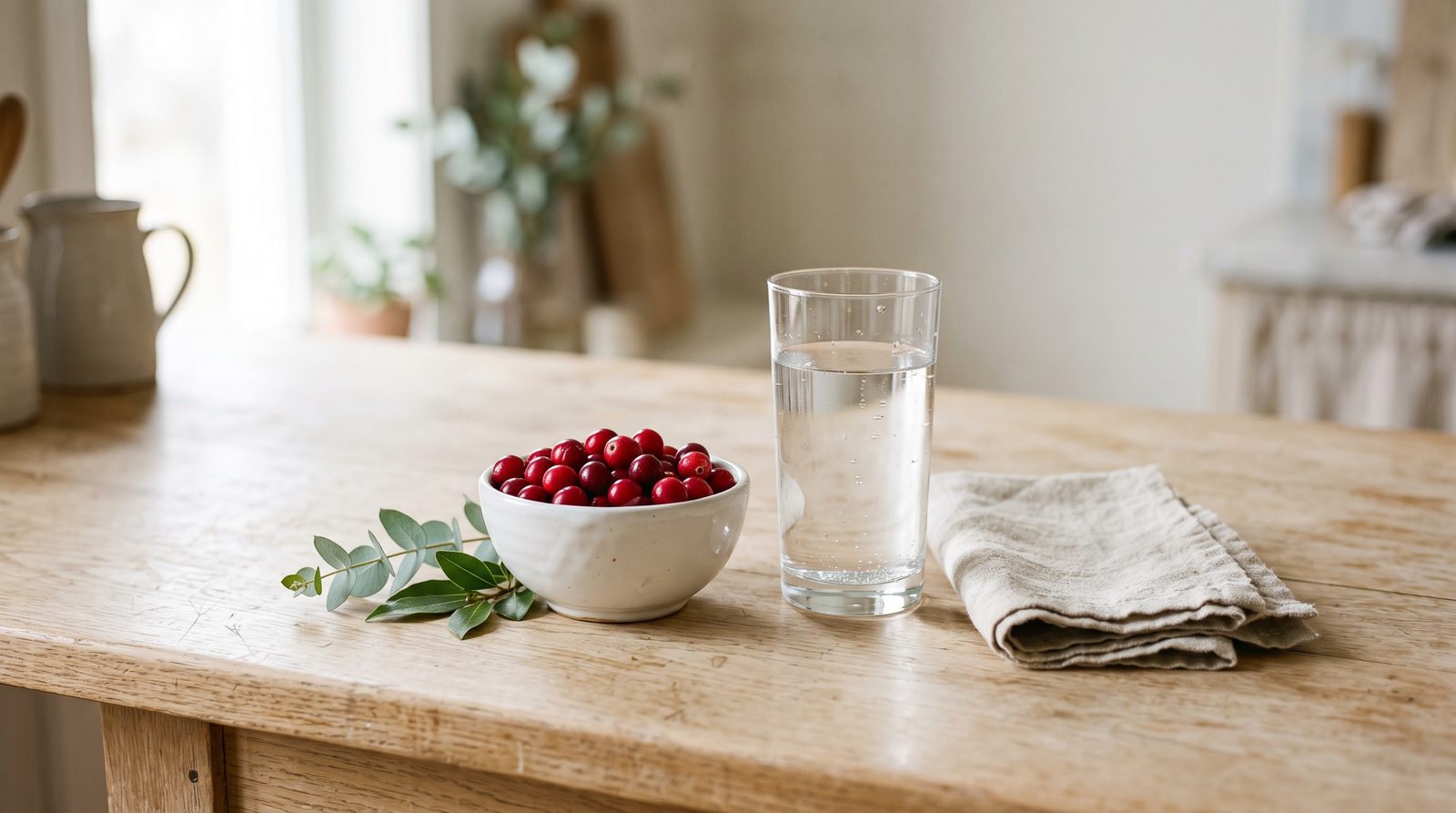
If you have ever typed your symptoms into a search bar at 11 p.m., you already know the two answers the internet gives for urinary tract infections. Cranberry. D-mannose.
One of them holds up better than the skeptics expect. The other one just failed the largest and most careful test it has ever been given. Here is what the research actually shows, and what is worth your money.
First, the scale of this
Urinary tract infections are one of the most common bacterial infections there are, accounting for about 0.9 percent of all outpatient visits in the United States (Foxman, 2014). They land on women far more often than men, and for a sizeable group they keep coming back.
Researchers usually define recurrent UTI as at least 2 infections in 6 months, or 3 in 12 months (Hayward, 2024). If that describes you, prevention stops being a nice idea and becomes the whole point.
Cranberry: better than its reputation
Cranberry has been dismissed for years as folk medicine. The evidence base is bigger than most people realize.
The 2023 Cochrane review is the fifth update of a review first published in 1998. This version included 50 randomized trials and 8,857 participants. Pooling the 26 trials that could be combined, cranberry products reduced the risk of symptomatic, culture-verified UTIs, with a risk ratio of 0.70 across 6,211 participants. The reviewers rated that as moderate certainty evidence (Williams, 2023).
The detail matters more than the headline. Cranberry probably helps in three groups: women with recurrent UTIs (risk ratio 0.74 across 8 trials and 1,555 women), children, and people who become susceptible after a medical procedure. In three other groups the reviewers found little or no benefit, with low certainty evidence: older adults in institutional care, pregnant women, and people with bladder emptying problems from nerve or muscle conditions.
Two more useful findings. Stomach upset was not clearly more common with cranberry than with placebo. And there was no clear relationship between the dose of proanthocyanidins, the compound cranberry brands compete on, and how well it worked. The evidence comparing juice with tablets, or higher doses with lower ones, was rated very low certainty. So paying extra for a bigger number on the label is not currently supported by the trials. (Labels overpromising is a pattern, one we also found with gut health gummies.)
One thing cranberry is not: a treatment. All of this is about preventing the next infection, not clearing the one you have.
D-mannose: the story changed in 2024
D-mannose is a simple sugar that is supposed to stop E. coli from sticking to the bladder wall. The mechanism is plausible, and for a decade the evidence looked good.
That reputation rests mostly on a 2013 trial of 308 women with recurrent UTIs. Over 6 months, 14.6 percent of the D-mannose group had a recurrence, compared with 20.4 percent on daily nitrofurantoin and 60.8 percent of the group given nothing at all (Kranjcec, 2014). Those numbers spread fast, and they are still the ones quoted on supplement labels.
Look closely and the weakness shows. The comparison group received no prevention rather than a placebo, and nobody was blinded to what they were taking. Trials built that way tend to flatter the treatment.
In 2024, researchers ran the trial properly. Across 99 primary care centers in the UK, 598 women with recurrent UTIs were randomized to 2 grams of D-mannose powder daily or a matching placebo powder, double blind, for 6 months. The result: 51.0 percent of the D-mannose group and 55.7 percent of the placebo group contacted their clinic with a suspected UTI. The risk difference was 5 percentage points, with a confidence interval running from minus 13 to plus 3, meaning the result is fully compatible with no benefit at all. Symptom duration, antibiotic use, time to the next infection, and hospital admissions all showed no significant difference (Hayward, 2024).
The authors did not hedge. Their conclusion was that D-mannose should not be recommended for prevention in women with recurrent UTIs in the community.
It appears to be safe, and it is not expensive as supplements go. But if you are choosing where to put your effort, this is not the place.
The cheapest thing on the list works best
Here is the finding that rarely makes it into a supplement ad.
Researchers took 140 premenopausal women who had at least 3 UTIs in the previous year and who drank less than 1.5 liters of fluid a day. Half were asked to add 1.5 liters of water daily for a year. Half changed nothing.
The water group averaged 1.7 infections over the year. The control group averaged 3.2. Antibiotic courses fell from 3.6 to 1.9, and the average stretch between infections went from 84 days to 143 (Hooton, 2018).
Two caveats keep this honest. The trial was open label, so everyone knew which group they were in. And it only enrolled women who were drinking very little to begin with, so it does not show that going from 2 liters to 3.5 helps. If you are already well hydrated, this is not your missing piece. If you are not, it is the best return on this page.
Two prescription options worth asking about
Both of these are conversations with a doctor rather than things to buy, and both are underused.
Methenamine hippurate. This is not an antibiotic. It turns into formaldehyde in acidic urine, which makes the bladder an unfriendly place for bacteria. A UK trial randomized 240 women with recurrent UTIs to methenamine hippurate or to standard daily low dose antibiotics for 12 months. Infection rates were 1.38 episodes per person-year on methenamine and 0.89 on antibiotics, a gap that stayed inside the trial's non-inferiority margin of one infection per year. Antibiotic resistance showed up in a higher share of women taking daily antibiotics (Harding, 2022). For women who want off a permanent antibiotic, that is a real option to raise. (Repeated courses are also hard on your gut, and we cover rebuilding your gut after antibiotics.)
Vaginal estrogen after menopause. Falling estrogen changes the vaginal environment in ways that make UTIs more likely. (Falling estrogen changes plenty more, and we cover what shifts in perimenopause separately.) In a randomized trial of postmenopausal women with recurrent UTIs, fewer women using vaginal estrogen had an infection within 6 months than women using placebo cream, 11 of 18 against 16 of 17 (Ferrante, 2021). The trial was small, only 35 women, so treat the size of the effect loosely. The direction is consistent with what clinicians see, and it is a standard thing to ask about.
The American Urological Association's guideline on recurrent UTIs in women is built around exactly this goal, using non-antibiotic strategies where they work so that repeated antibiotic courses and the resistance that follows can be avoided (Anger, 2019).
When to stop self-managing and call someone
Get seen promptly for fever, chills, pain in your back or side, nausea and vomiting, or blood in your urine. Those can signal an infection that has reached the kidneys.
Also call if you are pregnant and have any urinary symptoms, if symptoms are not improving within a couple of days of starting antibiotics, or if infections keep returning. Recurrent UTIs deserve a proper workup rather than another round of guessing.
The calm takeaway
If you get UTIs often and drink very little, start with water. It is free and it outperformed everything else here.
Cranberry is a reasonable add-on with real evidence behind it, in juice or tablet form, and there is no reason to pay a premium for the highest PAC number on the shelf.
D-mannose can come off the list. And if you are still cycling through antibiotics, ask your doctor about methenamine hippurate, or about vaginal estrogen if you are past menopause. (More evidence-first guides live in our supplements section.)
This article is for general education and is not medical advice. Urinary symptoms, and especially fever or back pain with them, should be assessed by a clinician. Research cited was retrieved from PubMed.
References
- Foxman B. Urinary tract infection syndromes: occurrence, recurrence, bacteriology, risk factors, and disease burden. Infectious Disease Clinics of North America. 2014. PMID: 24484571
- Williams G, et al. Cranberries for preventing urinary tract infections. Cochrane Database of Systematic Reviews. 2023. PMID: 37068952
- Hayward G, et al. D-mannose for prevention of recurrent urinary tract infection among women: a randomized clinical trial. JAMA Internal Medicine. 2024. PMID: 38587819
- Kranjcec B, Papes D, Altarac S. D-mannose powder for prophylaxis of recurrent urinary tract infections in women: a randomized clinical trial. World Journal of Urology. 2014. PMID: 23633128
- Hooton TM, et al. Effect of increased daily water intake in premenopausal women with recurrent urinary tract infections: a randomized clinical trial. JAMA Internal Medicine. 2018. PMID: 30285042
- Harding C, et al. Methenamine hippurate compared with antibiotic prophylaxis to prevent recurrent urinary tract infections in women: the ALTAR non-inferiority RCT. Health Technology Assessment. 2022. PMID: 35535708
- Ferrante KL, et al. Vaginal estrogen for the prevention of recurrent urinary tract infection in postmenopausal women: a randomized clinical trial. Female Pelvic Medicine & Reconstructive Surgery. 2021. PMID: 31232721
- Anger J, et al. Recurrent uncomplicated urinary tract infections in women: AUA/CUA/SUFU guideline. The Journal of Urology. 2019. PMID: 31042112
Common questions
Does cranberry actually prevent UTIs?
For women who keep getting them, yes, modestly. The 2023 Cochrane review pooled 50 randomized trials and 8,857 people. Across all groups, cranberry products cut the risk of a symptomatic, culture-confirmed UTI by about 30 percent, rated as moderate certainty evidence. In the specific group of women with recurrent UTIs, it was a 26 percent reduction across 8 trials and 1,555 women, and that result only just cleared statistical significance. So it helps some women some of the time. It is not a substitute for treatment when you already have an infection.
Is D-mannose worth taking?
The best evidence now says no, at least not for prevention. A 2024 trial across 99 UK primary care practices randomized 598 women with recurrent UTIs to 2 grams of D-mannose daily or a matching placebo for 6 months. Fifty-one percent of the D-mannose group and 55.7 percent of the placebo group came back with a suspected UTI, a difference of 5 percentage points with a confidence interval that crossed zero. No secondary outcome favored it either. The authors concluded plainly that D-mannose should not be recommended for prevention in this group.
Why do so many people online swear by D-mannose then?
People swear by D-mannose because of an earlier, much more encouraging trial. In 2013, researchers randomized 308 women with recurrent UTIs to D-mannose, to nitrofurantoin, or to no prevention at all. Recurrence was 14.6 percent with D-mannose and 60.8 percent with nothing. That looks dramatic, but the comparison group got no treatment rather than a placebo, and nobody was blinded. Those are exactly the conditions under which effects tend to shrink once a proper placebo controlled trial is run. That is what happened in 2024.
What has the strongest evidence of anything on this list?
Drinking more water, if you are someone who drinks very little. In a 12 month randomized trial of 140 premenopausal women who had at least 3 UTIs in the past year and drank under 1.5 liters of fluid a day, adding 1.5 liters of water daily cut the average number of infections from 3.2 to 1.7. Antibiotic courses dropped from 3.6 to 1.9, and the average gap between infections stretched from 84 days to 143. It costs nothing, and the effect size beats every supplement here.