GUT HEALTH
How to Rebuild Your Gut After Antibiotics: A Calm, Food-First Guide
Antibiotics can save your life, and they can also unsettle your gut for a while. Here is what recovery actually looks like, in plain words, with kind steps that help.
Maybe you just finished a course of antibiotics for a sinus infection, a UTI, or a chest cold. (If UTIs are a repeat visitor, we covered what actually prevents them.) You are glad to feel better, but your stomach feels off. Loose stools, bloating, or a gut that just is not itself. First, take a breath. This is common, and for most healthy people it settles with time and a little care.
Antibiotics are important medicine. Sometimes you truly need them, and taking them when your doctor prescribes them is the right call. What follows is not about avoiding antibiotics. It is about helping your gut find its footing again afterward, using calm, food-first steps.
What antibiotics do to your gut
Your gut is home to trillions of tiny microbes, mostly bacteria, that help you digest food, calm inflammation, and make helpful compounds. Together they are called your gut microbiome. Antibiotics are designed to kill bacteria that make you sick. The trouble is they cannot always tell the difference between the harmful bacteria and the helpful ones, so some of your good residents get caught in the crossfire.
One careful study followed healthy adults for six months after a short, strong course of antibiotics. Their gut bacteria took a real hit at first, then recovered close to their starting point within about six weeks. But even at the six-month mark, a handful of common, helpful species had still not returned for most people (PMID: 30349083). So the picture is reassuring and honest at the same time: healthy guts are resilient, and recovery also takes longer than most of us expect.
How long does recovery take?
For most healthy people, the gut starts to feel more normal within a few weeks. Full recovery of the microbiome can take longer, sometimes months, and a few species may stay low for a while (PMID: 30349083). That is not a reason to worry. It is a reason to be patient and gentle with yourself. You are not doing anything wrong if your gut takes a bit to bounce back.
What actually helps it rebuild
Here is the good news. The same steady, food-first habits that support any healthy gut are exactly what help it recover after antibiotics.
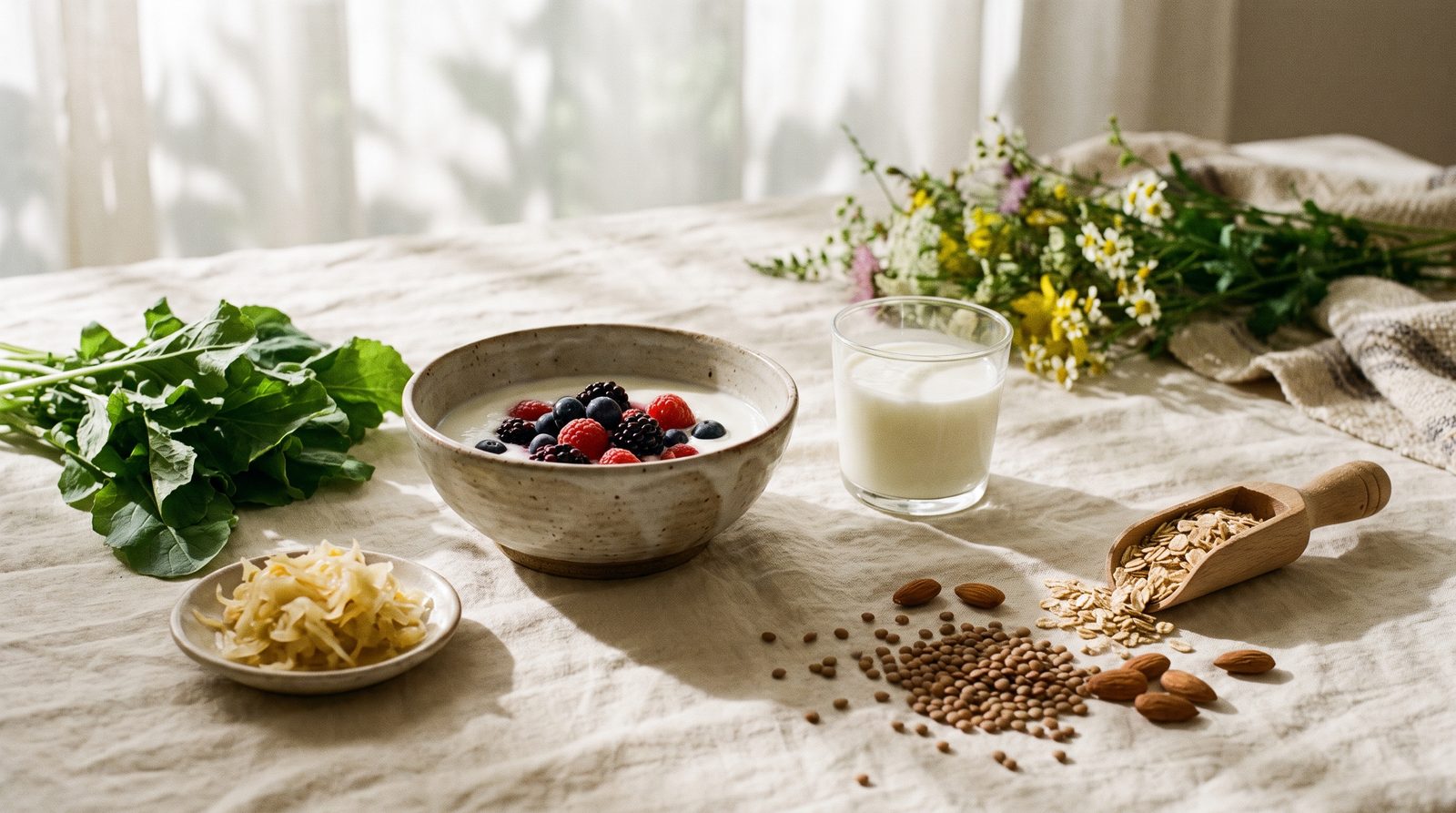
- Lean on fiber and plant variety. When you eat fiber, your good bacteria ferment it into helpful compounds that feed your gut lining and support a healthier balance. Different plants feed different microbes, so variety matters, and our fiber guide covers how much to aim for. Aim for a colorful mix of vegetables, fruit, beans, lentils, oats, nuts, seeds, and whole grains (PMID: 34068353).
- Add fermented foods. In a Stanford study, people who ate more fermented foods like yogurt, kefir, kimchi, and sauerkraut saw their gut diversity go up and markers of inflammation go down over ten weeks (PMID: 34256014). A daily spoonful of a live-culture food is an easy, gentle place to start, and we compare fermented foods and probiotic pills if you are weighing both.
- Go slow with fiber if your gut is sensitive. Right after antibiotics, a big jump in fiber can feel like too much too fast. Add a little more than yesterday, drink water along the way, and give your gut time to adjust.
- Take care of the basics. Sleep, gentle movement, and lower stress all support a healthier gut environment, thanks to the two-way line between your gut and your brain. None of this has to be dramatic. Small, steady habits do the heavy lifting.
Should you take a probiotic after antibiotics?
This is the question everyone asks, and the honest answer is: it depends, and the evidence is mixed. Probiotics are live bacteria you take on purpose, usually as a supplement or in certain foods.
Here is a surprising finding worth knowing. In one study, people who took a multi-strain probiotic after antibiotics actually had a slower return of their own native gut bacteria than people who took nothing and let their gut recover on its own (PMID: 30193113). The probiotic bacteria settled in, but they seemed to crowd out the person's original residents for a time.
That does not mean probiotics are bad. Other research suggests certain probiotic strains can lower the risk of antibiotic-associated diarrhea for some people, and we compare the best probiotics to take with antibiotics, strain by strain. The point is that a probiotic is not automatically the answer, and more is not always better. If you are curious about a probiotic, talk with your doctor or pharmacist about whether a specific strain makes sense for your situation, rather than grabbing whatever is on the shelf. (Our guide to whether you actually need a probiotic can help you have that conversation.)
When to check in with your doctor
Most post-antibiotic tummy trouble is mild and passes. But some symptoms deserve a call to your doctor, especially:
- Severe or watery diarrhea, particularly with fever or belly pain
- Diarrhea that lasts more than a few days or keeps coming back
- Blood in your stool
- Signs of dehydration, like dizziness or very dark urine
These can be signs of an infection like C. difficile that needs medical care, not a home remedy. Trust your gut, in every sense, and reach out if something feels wrong.
Be patient and kind with your gut
Here is the hopeful truth. For most healthy people, the gut is remarkably resilient. Give it real food, a little variety, some fermented goodness, and time, and it tends to find its way back (PMID: 30349083). You do not need a cabinet full of supplements or a strict cleanse. You need a few steady habits and some patience. Your body is on your side here. (When you are ready for more, our gut health section has you covered.)
References
- Palleja A, et al. Recovery of gut microbiota of healthy adults following antibiotic exposure. Nat Microbiol. 2018. PMID: 30349083
- Suez J, et al. Post-Antibiotic Gut Mucosal Microbiome Reconstitution Is Impaired by Probiotics and Improved by Autologous FMT. Cell. 2018. PMID: 30193113
- Wastyk HC, et al. Gut-microbiota-targeted diets modulate human immune status. Cell. 2021. PMID: 34256014
- Cronin P, et al. Dietary Fibre Modulates the Gut Microbiota. Nutrients. 2021. PMID: 34068353
This article is for education only and is not medical advice. Always take antibiotics as prescribed, and talk with your doctor about severe or lasting symptoms or before starting a supplement. Research cited was retrieved from PubMed.
Common questions
How long does it take for the gut to recover after antibiotics?
For most healthy people, the gut starts feeling more normal within a few weeks after antibiotics. Full recovery of the microbiome can take longer, though. In one study of healthy adults, the gut bacteria returned close to baseline within about six weeks, but a few common helpful species were still missing at six months. So expect real improvement in weeks, with full rebuilding taking longer, and be patient with yourself.
Should I take a probiotic after antibiotics?
The evidence on taking a probiotic after antibiotics is mixed. One study found that a multi-strain probiotic actually slowed the return of people's own native gut bacteria compared with recovering naturally. Other research suggests certain strains can reduce antibiotic-associated diarrhea. Probiotics are not automatically the answer, so ask your doctor or pharmacist whether a specific strain fits your situation.
What foods help rebuild the gut after antibiotics?
A colorful variety of fiber-rich plants like vegetables, fruit, beans, lentils, oats, nuts, seeds, and whole grains feeds your good bacteria. Fermented foods like yogurt, kefir, kimchi, and sauerkraut can raise gut diversity too. Add fiber slowly if your gut feels sensitive, and drink plenty of water.
Can I do anything to protect my gut while taking antibiotics?
Focus on the basics: eat real, fiber-rich food when you can, stay hydrated, and take the full course exactly as prescribed. Some people find spacing out yogurt or a probiotic from their antibiotic dose helps, but check with your pharmacist. Most importantly, do not skip or stop antibiotics on your own, since finishing the course matters.
When should I see a doctor for symptoms after antibiotics?
Call your doctor if you have severe or watery diarrhea, especially with fever or belly pain, diarrhea that lasts more than a few days or keeps returning, blood in your stool, or signs of dehydration like dizziness. These can point to an infection such as C. difficile that needs medical care rather than a home remedy.