SUPPLEMENTS
Low Iron in Women: Signs You're Running on Empty
Tired all the time and not sure why? Low iron is a common, overlooked cause in women. Here is the calm, science-backed version of what to watch for and what actually helps.
If you feel wiped out no matter how much you sleep, low iron is worth a serious look. It is one of the most common nutrition gaps in women, and one of the easiest to miss, because the main sign, being tired, is so easy to blame on a busy life. Let's walk through what low iron really is, why women are especially prone to it, and what to do about it, minus the fear and the hard sell.
Why women run low so often
Iron is the mineral your body uses to carry oxygen in your blood. Every month, a menstrual period takes some iron with it, and heavier periods take more. Heavy menstrual bleeding is common, often brushed off as normal, and it is a major reason so many women slide into low iron over time (PMID: 36706856). We go deeper on that in what heavy periods do to your iron, and what low iron does not do to your period.
Add pregnancy, which raises iron needs sharply, plus diets low in iron-rich foods, and it adds up. Worldwide, anemia affects about a third of people, and about half of those cases come down to iron deficiency, with women of childbearing age among the most affected (PMID: 26314490). So if your iron is low, you are far from alone, and it is not a personal failing.
Low iron and anemia are not the same thing
Here is a piece that trips people up. You can be low in iron well before you are anemic. Your body keeps iron in storage, measured by a marker called ferritin. When stores run down but your red blood cells still look normal, that is iron deficiency without anemia. Keep drawing down the stores and eventually your red cells suffer too, which is iron deficiency anemia.
Why does this matter? Because you can feel the effects of low iron in that earlier stage, before a standard blood count would call you anemic. Waiting until you are officially anemic to take it seriously means living tired for longer than you need to.
Signs you might be running on empty
Low iron is sneaky because its signs are easy to explain away. The most common one is fatigue that rest does not fix. Others women often notice include:
- Feeling breathless or having a racing heart with light activity, like climbing stairs
- Looking paler than usual, or pale inside the lower eyelids
- Cold hands and feet
- Brittle nails or more hair shedding than normal
- Trouble concentrating, or a foggy, worn-down feeling
- Unusual cravings for ice or non-food items
None of these prove low iron on their own, and plenty of other things can cause them. (Thyroid trouble and low B12 are two others worth knowing about.) But if several sound familiar and you have heavy periods or a low-iron diet, it is a reasonable thing to check.
The part that surprises people: tired, even without anemia
This is where the honest science gets interesting. In a randomized trial, non-anemic women with unexplained fatigue took either iron or a placebo for a month. The iron group's fatigue dropped by about 29 percent, compared with 13 percent on placebo, and the benefit showed up mainly in women whose iron stores were low or borderline (PMID: 12763985). A later analysis that pooled several trials reached the same conclusion: in people with low iron but no anemia, improving iron status modestly reduced fatigue (PMID: 28625177).
So this is not just about the most severe cases. If your stores are low, topping them back up may genuinely help you feel less drained, even if a basic blood test says you are not anemic.
Food first: getting more iron from your plate
The best starting place is food. Iron comes in two forms, and they behave differently:
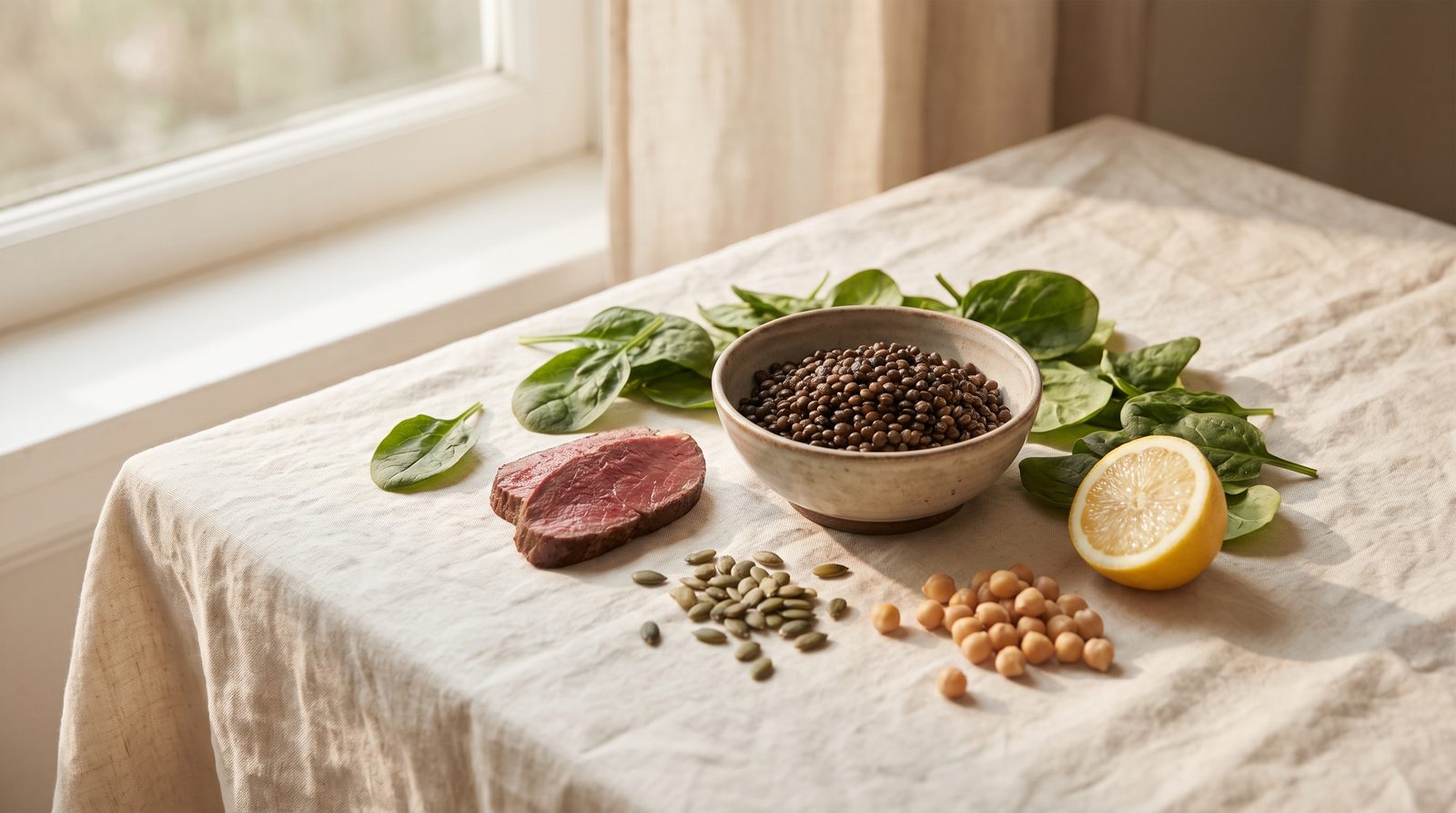
- Heme iron comes from animal foods like red meat, poultry, and seafood. Your body absorbs it easily.
- Non-heme iron comes from plants like beans, lentils, tofu, spinach, and fortified cereals. It is absorbed less readily, but you can help it along.
One simple trick: pair plant iron with a source of vitamin C. Ascorbic acid is the most effective enhancer of non-heme iron absorption, so squeezing lemon on your lentils or having bell peppers, tomatoes, or citrus alongside a bean dish helps your body take up more (PMID: 15743017). On the flip side, tea and coffee can blunt iron absorption, so it is worth keeping them between meals rather than with your iron-rich plate.
When to test, and why not to guess
If you suspect low iron, the smart move is to ask your doctor for a blood test rather than self-diagnosing from a checklist. A ferritin level, which reflects your iron stores, along with other markers, gives a clearer picture than a standard blood count alone (PMID: 26314490). Testing also matters because ongoing iron loss sometimes points to a cause worth finding, like very heavy periods or, less often, a gut issue.
Why not to megadose on your own
It is tempting to grab a high-dose iron supplement and call it done, but more is not better here. Iron can cause stomach upset and constipation, which is already common in women, and your body has no easy way to get rid of a large excess, so too much can build up and cause harm, especially in people with certain conditions. Iron supplements are best taken for a real, confirmed deficiency, at a dose your doctor guides, not as a daily just-in-case. If you do need one, here is which iron supplement form is easiest on your stomach and how often to take it. Oral iron is usually the first-line fix when it is needed (PMID: 26314490).
The calm bottom line
Low iron is common in women, easy to miss, and very treatable. If you are tired in a way that rest does not touch, especially with heavy periods or a low-iron diet, it is worth checking rather than pushing through. Build meals around iron-rich foods, pair plant sources with a little vitamin C, and if a test confirms you are low, work with your doctor on the right amount. You do not have to earn your energy back with willpower. Sometimes the fix is as simple as refilling the tank. (And if your tiredness is more of a 3 p.m. pattern than an all-day fog, our guide to afternoon energy slumps is the better read. More guides to common shortfalls live in our supplements section.)
References
- Munro MG, et al. The relationship between heavy menstrual bleeding, iron deficiency, and iron deficiency anemia. Am J Obstet Gynecol. 2023. PMID: 36706856
- Lopez A, et al. Iron deficiency anaemia. Lancet. 2016. PMID: 26314490
- Verdon F, et al. Iron supplementation for unexplained fatigue in non-anaemic women: double blind randomised placebo controlled trial. BMJ. 2003. PMID: 12763985
- Yokoi K, Konomi A. Iron deficiency without anaemia is a potential cause of fatigue: meta-analyses of randomised controlled trials and cross-sectional studies. Br J Nutr. 2017. PMID: 28625177
- Teucher B, et al. Enhancers of iron absorption: ascorbic acid and other organic acids. Int J Vitam Nutr Res. 2004. PMID: 15743017
This article is for education only and is not medical advice. If you have symptoms that worry you, or before starting an iron supplement, please talk with your doctor and get tested first. Research cited was retrieved from PubMed.
Common questions
What are the first signs of low iron in women?
The most common first sign is fatigue that rest does not fix. Others include feeling breathless or having a racing heart with light activity, looking paler than usual, cold hands and feet, brittle nails, more hair shedding, trouble concentrating, and sometimes a craving for ice. None of these prove low iron on their own, but if several sound familiar, especially with heavy periods, it is worth getting checked.
Can I have low iron without being anemic?
You can have low iron without being anemic. Your body keeps iron in storage, and those stores can run low well before a standard blood count shows anemia. This is called iron deficiency without anemia, and it can still leave you feeling tired. A randomized trial found that non-anemic women with low iron stores and unexplained fatigue felt less tired after taking iron, so you do not have to be officially anemic to feel the effects.
Why are women more likely to have low iron?
Iron leaves the body with each menstrual period, and heavier periods take more. Heavy menstrual bleeding is common and often dismissed as normal, and it is a major reason women slide into low iron over time. Pregnancy raises iron needs sharply too. Worldwide, women of childbearing age are among the groups most affected by iron deficiency.
What foods help me get more iron?
Iron comes in two forms. Heme iron, from red meat, poultry, and seafood, is absorbed easily. Non-heme iron, from beans, lentils, tofu, spinach, and fortified cereals, is absorbed less readily, but pairing it with vitamin C helps a lot. Squeeze lemon on lentils or add peppers, tomatoes, or citrus to a bean dish. Keeping tea and coffee between meals rather than with your iron-rich plate also helps, since they can blunt absorption.
Should I just take an iron supplement to be safe?
Testing first is better than taking an iron supplement to be safe. Iron can cause stomach upset and constipation, and your body cannot easily clear a large excess, so too much can build up and cause harm, especially with certain conditions. Iron supplements are best used for a confirmed deficiency, at a dose your doctor guides, rather than as a daily just-in-case. Ask for a blood test that includes ferritin before starting.