SUPPLEMENTS
Magnesium for Women: Which Type for Sleep, Stress, and Cramps
Magnesium is one of the most talked-about minerals for women. Here is the calm, cited version: what it does, which type is which, and how much hype to keep.

If you spend any time online, you have probably seen magnesium called the answer to everything: better sleep, less stress, fewer cramps, calmer moods. Some of that is real, and some of it is hopeful marketing. Let's sort out which is which, in plain words, so you can decide if magnesium deserves a spot in your routine.
What magnesium actually does
Magnesium is a mineral your body uses for hundreds of everyday jobs, from making energy to relaxing your muscles to steadying your nervous system. It is genuinely important, and low intake over time has been linked with higher inflammation and a greater risk of some chronic conditions (PMID: 30484139).
Here is the part that surprises people: a lot of us do not get enough. Looking at national nutrition data, more than 40 percent of adults fall short of the recommended magnesium intake from food (PMID: 25564766). Women, older adults, and people who eat few whole grains, beans, and leafy greens are especially likely to run low. So the interest in magnesium is not just a trend. Many women really are a little short.
Food first, always
Before reaching for a supplement, know that magnesium is easy to find in everyday foods. Some of the richest sources are:
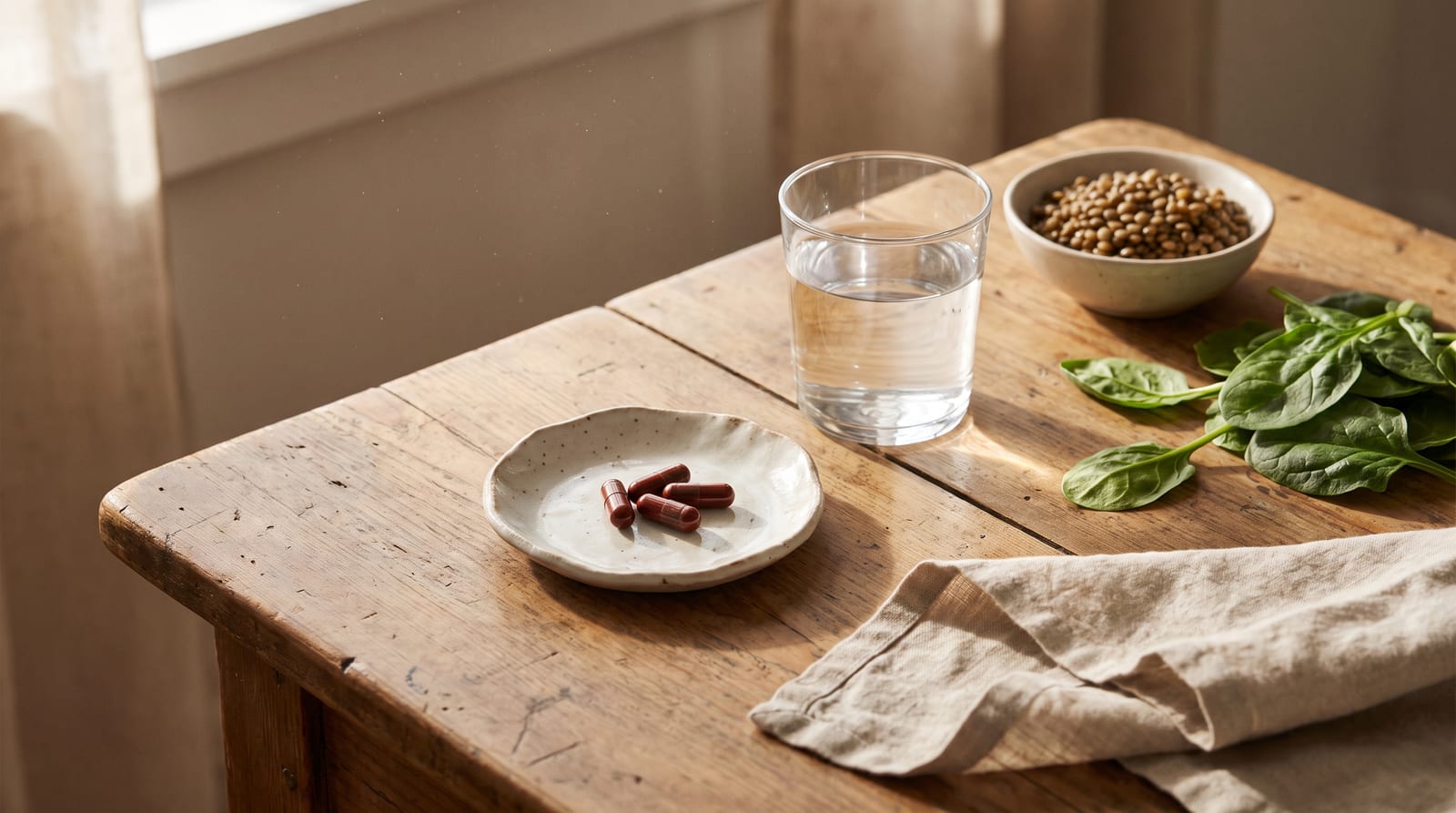
- Leafy greens like spinach and Swiss chard
- Beans, lentils, and edamame
- Nuts and seeds, especially pumpkin seeds and almonds
- Whole grains like oats, brown rice, and quinoa
- Dark chocolate, in reasonable amounts
Building meals around these foods covers your magnesium and brings along fiber, protein, and other nutrients your body loves. Food first is almost always the better starting place.
The different types, made simple
Walk down the supplement aisle and the labels can feel like a chemistry test. The word after magnesium tells you what it is paired with, and that affects how your body handles it. Here is the plain-English version:
- Magnesium glycinate. Gentle on the stomach and often chosen for sleep and stress, because it is well absorbed and less likely to cause loose stools.
- Magnesium citrate. Well absorbed and mildly relaxing to the bowels, so it is a common pick if constipation is part of the picture. It can be too much for sensitive stomachs. (Our full guide to constipation in women covers the food-first fixes.)
- Magnesium oxide. Cheap and common, but poorly absorbed. It is mostly used as a laxative or antacid rather than to top up your levels.
- Magnesium malate or threonate. Marketed for energy and brain health. These are newer and less studied, so keep your expectations modest.
If you are choosing a supplement to support sleep or stress, glycinate is a reasonable, gentle default. If constipation is your main concern, citrate may suit you better. There is no single best type, only the one that fits your goal and your gut. Our side-by-side guide to magnesium glycinate vs citrate for women gives a clear rule for sleep, PMS, and constipation.
What the evidence really shows
Now for the honest part, because this is where the hype outruns the science.
Sleep
Magnesium is sold heavily as a sleep aid, and it is easy to find the claim online. The research is softer than the marketing. A systematic review found that people with higher magnesium status tended to report better sleep in observational studies, but the controlled trials, where magnesium is actually given as a supplement, showed mixed and uncertain results (PMID: 35184264). A separate review of sleep supplements reached a similar view, noting that magnesium needs more and better studies before we can call it proven (PMID: 33441476). So magnesium may help some people sleep, especially if they were low to begin with, but it is not a guaranteed fix. (If midlife sleep is the real problem, see sleep, cortisol, and midlife weight.)
Cramps and PMS
This is where magnesium has firmer footing for women. A review of magnesium in women's health found supportive evidence for using it to help prevent menstrual cramps, premenstrual symptoms, and menstrual migraines (PMID: 28392498). If period cramps or PMS are part of your month, magnesium is a reasonable, low-risk thing to try alongside the basics.
Stress
Magnesium is involved in how your nervous system handles stress, and low levels are linked with feeling more frazzled. The direct evidence that supplements calm stress is still early, so think of magnesium as one supporting player, not a cure for a stressful season. (Ashwagandha has more trial data in this lane, and we reviewed what the ashwagandha trials show.)
Is it safe, and how much?
Magnesium from food is safe for healthy people. From supplements, most adults tolerate a modest daily dose well, though too much can cause loose stools or cramping. If you have kidney problems, or you take medications, magnesium can build up or interact, so this is a real talk-to-your-doctor situation. Start low, choose the form that fits your goal, and give it a few weeks.
The honest bottom line: magnesium is genuinely important, many women fall a little short, and it has real, if modest, support for cramps and PMS. It may gently help sleep and stress for some. Food first, a sensible supplement if you need it, and a healthy dose of skepticism toward the miracle claims. That is the calm, cited way to use it, and more of that approach lives in our supplements section.
References
- Nielsen FH. The Problematic Use of Dietary Reference Intakes to Assess Magnesium Status and Clinical Importance. Biol Trace Elem Res. 2018. PMID: 30484139
- Agarwal S, et al. Comparison of prevalence of inadequate nutrient intake based on body weight status of adults in the United States: NHANES 2001-2008. J Am Coll Nutr. 2015. PMID: 25564766
- Arab A, et al. The Role of Magnesium in Sleep Health: a Systematic Review of Available Literature. Biol Trace Elem Res. 2023. PMID: 35184264
- Chan V, Lo K. Efficacy of dietary supplements on improving sleep quality: a systematic review and meta-analysis. Postgrad Med J. 2022. PMID: 33441476
- Parazzini F, et al. Magnesium in the gynecological practice: a literature review. Magnes Res. 2017. PMID: 28392498
This article is for education only and is not medical advice. Talk with your doctor before starting magnesium, especially if you have kidney problems or take medications. Research cited was retrieved from PubMed.
Common questions
Which type of magnesium is best for sleep and stress?
Magnesium glycinate is a common, gentle choice for sleep and stress because it is well absorbed and less likely to cause loose stools. That said, the evidence that magnesium reliably improves sleep is mixed, so keep your expectations realistic. It may help most if you were low in magnesium to begin with.
What is the difference between magnesium glycinate and citrate?
Glycinate is gentle on the stomach and often used for sleep and stress. Citrate is well absorbed and has a mild laxative effect, so it is a common pick if constipation is a concern, though it can be too much for sensitive stomachs. There is no single best type, just the one that matches your goal and your gut.
Does magnesium really help with period cramps and PMS?
Period cramps and PMS are where magnesium has firmer support for women. A review of magnesium in women's health found evidence for using it to help prevent menstrual cramps, premenstrual symptoms, and menstrual migraines. If cramps or PMS are part of your month, magnesium is a reasonable, low-risk option to try alongside the basics.
How much magnesium do women need, and can I get it from food?
Adult women generally need around 310 to 320 mg per day, and food is the best starting place. Leafy greens, beans, lentils, nuts, seeds, and whole grains are all rich sources. More than 40 percent of adults fall short from food alone, so a supplement can help if your diet is low, but food first is almost always better.
Is it safe to take a magnesium supplement every day?
For most healthy adults, a modest daily dose of magnesium is well tolerated, though too much can cause loose stools or cramping. If you have kidney problems or take medications, magnesium can build up or interact, so check with your doctor first. Start with a low dose, pick the form that fits your goal, and give it a few weeks.