Hormones
Perimenopause and Joint Pain: The Estrogen Link Nobody Mentions
Your hands ache in the morning and your knees complain on the stairs, and nothing explains it. Doctors finally gave this a name in 2024. Here is what the research says helps.
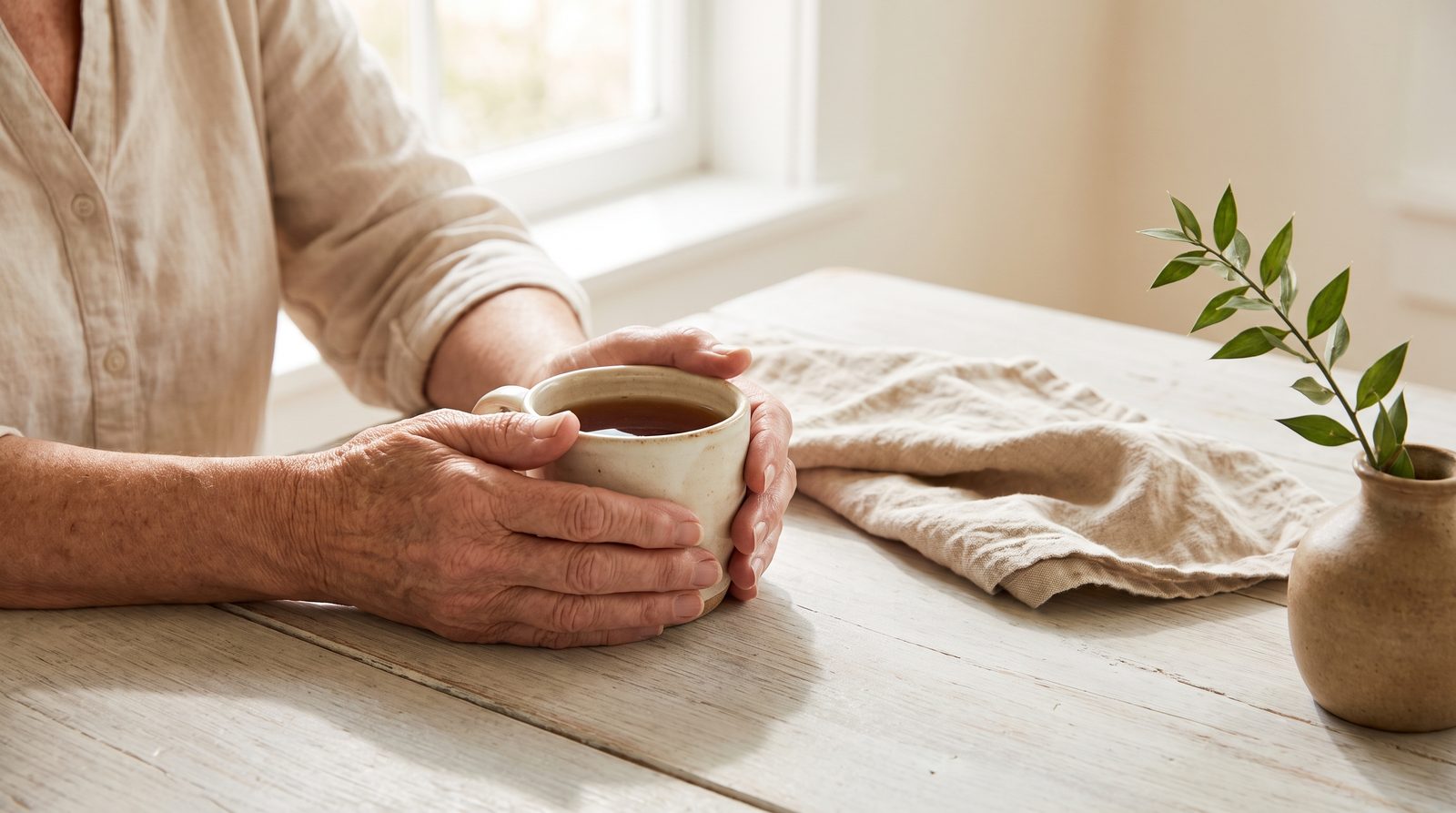
It usually starts small. Your hands ache in the morning and take a while to loosen up. A knee complains on the stairs. A shoulder that never bothered you starts to. You have not changed your workouts, you have not injured anything, and yet your body feels ten years older than it did last spring.
Most women get told this is just aging. Some get sent for an arthritis workup that comes back clean. Very few get told the thing that would actually explain it, which is that the hormone shift of perimenopause reaches your joints, your muscles, and your bones, and it does it early.
The name nobody gave it until recently
In 2024, a group of orthopedic and sports medicine doctors published a paper arguing that these symptoms deserve to be treated as one connected problem rather than a pile of unrelated aches. They called it the musculoskeletal syndrome of menopause.
Their estimate: more than 70 percent of women will have musculoskeletal symptoms during the menopause transition, and about 25 percent will be disabled by them. The cluster includes joint pain, loss of muscle mass, loss of bone density, and faster progression of osteoarthritis (Wright, 2024).
Read that again. Seventy percent. This is not a rare presentation. It is closer to the default experience, and it has been sitting in plain sight without a name.
Why estrogen has anything to do with your knees
Estrogen is not only a reproductive hormone. Receptors for it sit in cartilage, bone, muscle, tendon, and in the parts of your nervous system that process pain.
That last one matters more than people expect. Estrogen helps regulate immune cells and the signaling molecules involved in bone remodeling, and it appears to change how sensitive you are to pain at the level of the central nervous system (Burstein, 2007). So when estrogen drops, two things can happen at once. The tissue itself changes, and your threshold for feeling it changes. The same amount of wear can simply hurt more.
The natural experiment that makes the case
Here is the strongest evidence that estrogen is doing something real, and it comes from an unexpected place.
Aromatase inhibitors are drugs given to postmenopausal women after hormone receptor positive breast cancer. They work by cutting estrogen production to almost nothing. They are very effective, and they have one side effect that shows up constantly: joint pain.
Roughly 50 percent of women report new or worsening joint pain within a year of starting one, and it is the leading reason women quit the medication early (Grigorian, 2022). About 30 percent stop within the first year.
That is close to a controlled experiment on what happens when estrogen falls off a cliff. The joints hurt. It is not in anyone's head, and it is not a coincidence.
So does adding estrogen back fix it?
This is where honesty matters more than a clean story.
The Women's Health Initiative ran a randomized, placebo controlled trial of estrogen alone in 10,739 postmenopausal women who had had a hysterectomy. Joint pain was extremely common at the start, reported by about 77 percent of participants in both groups.
After one year, joint pain was less frequent in the estrogen group than in the placebo group, 76.3 percent versus 79.2 percent, and the difference held through year three. Joint swelling, though, was slightly more common on estrogen, 42.1 percent versus 39.7 percent (Chlebowski, 2013).
The authors described the benefit as modest but sustained, and that is the fair reading. A three point difference in a symptom that most women had either way is real, and it is not a cure. Hormone therapy is worth discussing with your doctor for a lot of good reasons. Going into that conversation expecting it to erase joint pain sets you up for disappointment.
What has the best evidence behind it
The most encouraging finding in this whole area is not a supplement. It is exercise, and the trial that shows it was done in the hardest possible group.
Researchers took 121 breast cancer survivors on aromatase inhibitors who were already reporting joint pain, and who were doing almost no exercise at the start. Half were assigned to a year of 150 minutes a week of aerobic exercise plus supervised strength training twice a week. Half continued usual care.
At twelve months, worst joint pain scores dropped by 1.6 points, about 29 percent, in the exercise group. In the usual care group they rose slightly. Pain severity, pain interference, and stiffness all improved too (Irwin, 2015).
Sit with the setting for a second. These were women whose estrogen had been pharmacologically stripped away, which is a more extreme version of what perimenopause does gradually. Exercise still helped, substantially, over a year.
The strength training part is not optional here. You are losing muscle in this window anyway, and muscle is what takes load off a joint. This is also why protein intake earns its place in the conversation, since building muscle requires the raw material to do it.
What about supplements
A network meta analysis pooled 17 randomized trials covering 1,516 women, comparing treatments for estrogen deprivation joint pain. Acupuncture ranked highest for reducing pain intensity, followed by sham acupuncture, herbal combinations, exercise, duloxetine, vitamin D, and omega-3 fatty acids. Single natural products performed worse than the control conditions (Bae, 2023).
Two things worth noticing. Sham acupuncture ranking second tells you the placebo response in pain research is large, and any single small trial should be read with that in mind. And the fact that individual supplements landed below controls is a useful warning about the aisle of joint formulas marketed to women in exactly this age range.
Vitamin D is still worth checking, mostly because low levels are common and matter for bone. It is a reasonable thing to test and correct. It is not a joint pain treatment.
The part that gets missed: pain travels with sleep and fatigue
The Study of Women's Health Across the Nation followed 3,289 midlife women across 16 years, tracking 58 symptoms. When researchers looked at how symptoms grouped, pain did not sit by itself. It clustered with sleep disturbance and fatigue, and hot flashes tended to travel with that same group (Harlow, 2017).
That is clinically useful. If you are sleeping badly, your pain will almost certainly feel worse, and pain will keep you up. Treating the sleep is not a distraction from the joint problem. It is part of treating it.
When it is worth pushing for a workup
Perimenopause explains a lot of midlife joint pain. It does not explain all of it, and some of what it resembles needs different care.
Widespread pain with deep fatigue, unrefreshing sleep, and tender points can point toward fibromyalgia, which overlaps heavily with this life stage and frequently begins around it (Vidal-Neira, 2024). Persistent swelling, redness, warmth in a joint, morning stiffness lasting well over an hour, fever, or unexplained weight loss are different signals and deserve prompt evaluation for inflammatory arthritis.
Asking for the workup is reasonable. So is asking your clinician directly whether the menopause transition is part of the picture, because that question is still skipped surprisingly often.
The calm takeaway
Your joints are not betraying you at random, and you are not imagining the timing. Estrogen affects joint tissue and pain sensitivity, and the drop is real enough that stripping estrogen with medication reliably produces joint pain.
The best supported response is the least glamorous one. Regular aerobic exercise and strength training twice a week, sustained long enough to count, with enough protein to build on and sleep treated as part of the pain plan rather than separate from it. Hormone therapy may take a modest edge off and is worth a real conversation with your doctor. The joint supplement aisle is where the evidence is thinnest.
None of that is a quick fix. It is, however, the version that holds up.
This article is for general education and is not medical advice. Talk with your doctor about new or worsening joint pain, especially if you have swelling, redness, fever, or stiffness that lasts more than an hour in the morning. Research cited was retrieved from PubMed.
References
- Wright VJ, Schwartzman JD, Itinoche R, Wittstein J. The musculoskeletal syndrome of menopause. Climacteric. 2024. PMID: 39077777
- Burstein HJ. Aromatase inhibitor-associated arthralgia syndrome. The Breast. 2007. PMID: 17368903
- Grigorian N, Baumrucker SJ. Aromatase inhibitor-associated musculoskeletal pain: an overview of pathophysiology and treatment modalities. SAGE Open Medicine. 2022. PMID: 35321462
- Chlebowski RT, et al. Estrogen alone and joint symptoms in the Women's Health Initiative randomized trial. Menopause. 2013. PMID: 23511705
- Irwin ML, et al. Randomized exercise trial of aromatase inhibitor-induced arthralgia in breast cancer survivors. Journal of Clinical Oncology. 2015. PMID: 25452437
- Bae K, et al. Comparison of the clinical effectiveness of treatments for aromatase inhibitor-induced arthralgia in breast cancer patients: a systematic review with network meta-analysis. Critical Reviews in Oncology/Hematology. 2023. PMID: 36535489
- Harlow SD, et al. It is not just menopause: symptom clustering in the Study of Women's Health Across the Nation. Women's Midlife Health. 2017. PMID: 29326841
- Vidal-Neira LF, et al. Climacteric and fibromyalgia: a review. Climacteric. 2024. PMID: 39037037
Common questions
Is joint pain really a symptom of perimenopause?
Joint pain is a symptom of perimenopause, and it is far more common than most women are told. A 2024 review estimated that more than 70 percent of women experience musculoskeletal symptoms during the menopause transition, and about 25 percent are disabled by them. The authors proposed calling the whole cluster the musculoskeletal syndrome of menopause, since joint pain, muscle loss, bone loss, and osteoarthritis progression tend to arrive together and share the same driver, which is falling estrogen. If your aches started in your forties without an injury to explain them, the timing is not a coincidence.
How do I know if it is perimenopause or arthritis?
You often cannot tell on your own, and it is reasonable to ask for a workup. Some signs point away from a hormone explanation and toward inflammatory arthritis: a joint that stays visibly swollen, red, or warm, morning stiffness that lasts well over an hour, fever, or unexplained weight loss. Those deserve prompt evaluation. Widespread pain with heavy fatigue, poor sleep, and tender points can instead point toward fibromyalgia, which overlaps a lot with this life stage. Perimenopausal joint pain tends to be more diffuse, more migratory, and worse in the morning until you move around.
Will hormone therapy fix my joint pain?
Hormone therapy may help joint pain a little. In the Women's Health Initiative randomized trial of estrogen alone in 10,739 women, joint pain was reported by about 77 percent at the start. After a year, joint pain was less frequent on estrogen than on placebo, 76.3 percent versus 79.2 percent, and that difference held through year three. Joint swelling was slightly more common on estrogen. The researchers called the benefit modest but sustained, which is the honest description. Hormone therapy is worth discussing with your doctor for several reasons, but it is not a joint pain cure.
What actually helps midlife joint pain the most?
Exercise has the best trial evidence, including in the toughest test group. In a yearlong randomized trial of 121 breast cancer survivors taking aromatase inhibitors, which cut estrogen to almost nothing, women assigned to 150 minutes a week of aerobic exercise plus strength training twice a week saw worst joint pain drop about 29 percent. The usual care group got slightly worse. Strength training matters especially, because stronger muscle takes load off the joint, and you are losing muscle during this window anyway. Getting enough protein supports that.
Are joint supplements worth trying?
The evidence is weak, and that is worth knowing before you spend. A network meta-analysis of 17 randomized trials in 1,516 women found that single natural products actually performed worse than control conditions for estrogen deprivation joint pain. Exercise, duloxetine, vitamin D, and omega-3s all ranked above them, though acupuncture ranked highest and sham acupuncture ranked second, which tells you how large the placebo response is in pain research. Vitamin D is still worth testing and correcting if you are low, mostly for your bones. Treat it as bone care, not as a pain treatment.