Blood Sugar
Blood Sugar Balance for Women: A Simple, No-Fear Guide
You do not need to fear carbs or wear a monitor to keep your blood sugar steady. A few simple habits do most of the work, and the science behind them is refreshingly practical.
You know the feeling. You eat a quick lunch, feel fine for an hour, then hit a wall around 3 p.m. Suddenly you are foggy, cranky, and hunting for a snack. It is easy to blame yourself for being tired or lacking willpower. But often the real story is happening quietly in your bloodstream. It is your blood sugar.
Blood sugar has become a hot topic, and not always in a helpful way. Some of it online is pure fear, like carbs are the enemy and every meal is a test you can fail. That is not this. Keeping your blood sugar steady is one of the friendliest things you can do for your energy, your mood, and your cravings, and it does not require giving up bread or strapping on a gadget. Let's walk through what actually helps.
What "blood sugar balance" really means
Every time you eat, especially carbs like bread, rice, fruit, or sweets, your body breaks them down into glucose, a simple sugar that fuels your cells. Your blood sugar rises, your body releases a hormone called insulin to move that glucose into your cells, and things settle back down. This is normal and healthy. Your body is supposed to do this. (When cells stop responding well to that signal, that is insulin resistance, which we explain without the fear.)
The issue is not that blood sugar rises. It is how sharply it rises and falls. Picture a gentle hill versus a steep roller coaster. A big, fast spike is often followed by a hard drop, and that drop is what can leave you shaky, foggy, and reaching for a cookie an hour later. Smoothing those swings into gentler waves is the whole goal. Not zero rises. Just fewer roller coasters.
Why this matters more for women
Women consistently rank energy and fatigue as a top health concern, often above weight. Steady blood sugar is one of the most direct levers you have on day-to-day energy, because those sharp drops are a common hidden cause of the afternoon slump and the mid-morning crash.
There is a hormone angle too. Blood sugar and your hormones are in constant conversation, and that conversation shifts through your cycle and especially in perimenopause, when many women notice they handle carbs differently than they used to. The good news is that the basic habits that steady your blood sugar work at every stage of life. You do not need a different plan for every decade, just a few reliable moves. If you are in that stage now, our guide to how perimenopause changes blood sugar and what helps goes deeper.
The habits that actually work
Here is the part you can use today. These are simple, low-effort changes with real research behind them, and none of them ask you to cut out foods you love.
1. Order your plate: save the carbs for last
This one sounds almost too easy, but it is one of the most studied tricks there is. When you eat your vegetables and protein first and your carbs last, your blood sugar rises much more gently than if you had eaten the carbs first. Same food, same meal, just a different order.
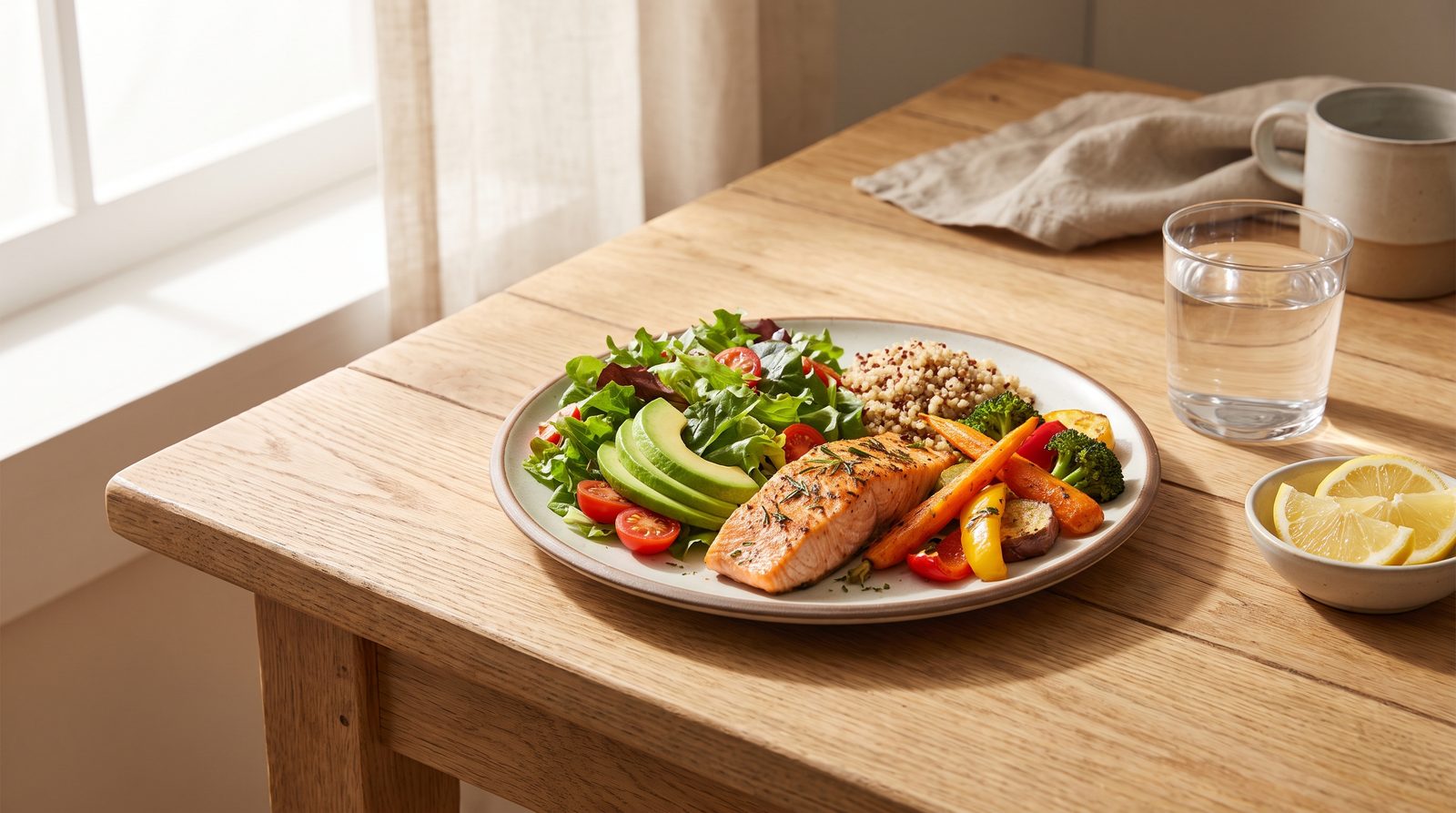
In one study of people with prediabetes, eating protein and vegetables before the carbs cut the peak blood sugar rise by more than 40 percent, and lowered the overall glucose response by nearly 39 percent, compared with eating the carbs first (Shukla 2018). And this is not just for people with blood sugar trouble. In healthy adults, eating vegetables first, then protein, then carbs also blunted the glucose response and nudged up a gut hormone that helps you feel full (Sun 2019). A longer real-world study found that people could actually stick with a carbs-last habit, and doing so improved the quality of their diet along the way (Shukla 2023). So start your dinner with the salad and the salmon, and enjoy the rice or bread after.
2. Never eat a naked carb
A carb on its own, like crackers by themselves or juice on an empty stomach, tends to spike fastest. Pairing carbs with protein, fat, or fiber slows everything down. Think apple with peanut butter, toast with eggs, or crackers with cheese.
The research on protein is especially neat. In one trial, having a small amount of protein right before a meal lowered the blood sugar response afterward and left people feeling more satisfied (King 2018). A helpful way to remember it: protein and fiber are like brakes for your blood sugar. Add them to any carb and the ride gets a lot smoother.
3. Take a short walk after you eat
You do not need a workout. A gentle 10 to 15 minute walk after a meal helps your muscles soak up glucose from your blood, which flattens the spike. A review that pooled several trials found that light walking after eating meaningfully lowered blood sugar compared with sitting still, and it beat simply standing (Buffey 2022). A stroll around the block after dinner, walking the dog, or even tidying the kitchen on your feet all count. This is one of the highest-payoff, lowest-effort habits on this list.
4. Build your meals on fiber and whole foods
Zoom out from any single meal and the pattern of what you eat matters most. Meals built around fiber-rich foods, vegetables, beans, whole grains, fruit, nuts, tend to raise blood sugar more slowly and keep you fuller longer. A large review of the research found that diets rich in fiber and whole foods, like Mediterranean-style eating, were linked to a lower risk of type 2 diabetes, while lots of sugary drinks and highly refined foods raised it (Toi 2020). You do not have to eat perfectly. Just aim to make fiber and protein the base of most meals (our fiber guide shows how much to aim for), and treat sugary drinks as the occasional thing rather than the daily default.
A quick, honest word on glucose monitors
You may have seen influencers wearing a continuous glucose monitor, a small sensor that tracks blood sugar in real time. They can be interesting, and for some people they are motivating. But if you do not have diabetes, know this: your blood sugar is supposed to rise after you eat. Seeing a spike on an app after a bowl of oatmeal is not a medical emergency, and there is not yet strong evidence that healthy people need one of these to eat well. The habits above deliver most of the benefit without the price tag or the anxiety. If you are curious, curiosity is fine. Just do not let a number on your arm turn a normal meal into a source of stress.
When to check in with your doctor
These habits are about feeling good day to day, not treating a medical condition. Loop in your doctor if you have symptoms like constant thirst, frequent urination, unexplained weight changes, or ongoing fatigue, or if you have risk factors like a family history of diabetes or a past pregnancy with gestational diabetes. A simple blood test can tell you where you stand. And if you already have diabetes or take medication that affects blood sugar, always work with your care team before changing your routine.
The bottom line
Steady blood sugar is not about fear or cutting out the foods you love. It is about a few gentle habits that smooth the roller coaster into easier waves. Eat your veggies and protein before your carbs, never send a carb in alone, take a short walk after meals, and build your plate on fiber and whole foods. Do those most of the time and you will likely notice steadier energy, fewer cravings, and calmer afternoons. That is the whole point, and it is a lot kinder than the internet makes it sound. For more gentle guides like this, visit our hormones section.
This article is for general education and is not medical advice. Talk to your doctor about your own health, especially if you have diabetes or take medication that affects blood sugar.
References
- Shukla AP, et al. The impact of food order on postprandial glycaemic excursions in prediabetes. Diabetes, Obesity & Metabolism. 2018. PMID: 30101510
- Sun L, et al. Postprandial glucose, insulin and incretin responses differ by test meal macronutrient ingestion sequence (PATTERN study). Clinical Nutrition. 2019. PMID: 31053510
- Shukla AP, et al. A Randomized Controlled Pilot Study of the Food Order Behavioral Intervention in Prediabetes. Nutrients. 2023. PMID: 37892527
- King DG, et al. A small dose of whey protein co-ingested with mixed-macronutrient breakfast and lunch meals improves postprandial glycemia and suppresses appetite in men with type 2 diabetes. American Journal of Clinical Nutrition. 2018. PMID: 29635505
- Buffey AJ, et al. The Acute Effects of Interrupting Prolonged Sitting Time in Adults with Standing and Light-Intensity Walking on Biomarkers of Cardiometabolic Health: A Systematic Review and Meta-analysis. Sports Medicine. 2022. PMID: 35147898
- Toi PL, et al. Preventive Role of Diet Interventions and Dietary Factors in Type 2 Diabetes Mellitus: An Umbrella Review. Nutrients. 2020. PMID: 32899917
Common questions
Do I have to give up carbs to keep my blood sugar steady?
You do not have to give up carbs to keep your blood sugar steady. The goal is not zero carbs, it is gentler rises. You can still enjoy bread, rice, fruit, and even dessert. Just eat your vegetables and protein first, pair carbs with protein or fiber instead of eating them alone, and take a short walk afterward. Same foods, smoother ride.
What is the single easiest habit to start with?
Eating your carbs last is the single easiest blood sugar habit to start with. In studies, having vegetables and protein before the carbs cut the peak blood sugar rise by more than 40 percent compared with eating the carbs first, using the exact same meal. Start dinner with the salad and protein, and have the rice or bread after.
Does walking after meals really help?
Walking after meals does help your blood sugar, and it does not take much. A gentle 10 to 15 minute walk after eating helps your muscles pull glucose out of your blood, which flattens the spike. A review of several trials found light walking after meals lowered blood sugar noticeably compared with sitting, and worked better than just standing.
Should I get a continuous glucose monitor if I do not have diabetes?
A continuous glucose monitor is probably not needed if you do not have diabetes. Your blood sugar is supposed to rise after you eat, so a spike on the app is usually normal, not an emergency. There is not yet strong evidence that healthy people benefit from one. The simple habits, ordering your plate, pairing carbs, and walking, deliver most of the benefit without the cost or the stress.