Gut Health
Fiber 101 for Women: How Much You Really Need (and Easy Ways to Get It)
Fiber is trending again, and for once the hype points in a helpful direction. Here is the plain, cited version for women: how much you need, the two kinds that matter, and how to add it without feeling puffy.
Fiber is having a real moment. It is all over social feeds, folded into the trend people are calling fibermaxxing, and stamped on more labels than ever. For once, the hype is pointing in a genuinely helpful direction. Fiber is one of the most well-studied, least glamorous tools for feeling good, and most of us are barely getting any.
Here is the uncomfortable part. The average woman eats far less fiber than she needs, and it has been that way for years. The good news is that fixing it is simple and does not require a single supplement. Let's clear up how much you actually need, the two types that matter, and how to get more without spending the afternoon feeling puffy.
How much fiber do you really need?
Most guidelines land around 25 grams a day for women and closer to 38 for men, or roughly 14 grams for every 1,000 calories you eat. That sounds reasonable until you see what people actually eat. One detailed review found that the median intake sits around 12 to 14 grams a day, and fewer than 1 in 20 Americans hit the recommended amount (Thompson 2016). So most of us are running at about half of where we should be. If you feel like your diet is fine but your fiber might be low, you are almost certainly right.
Soluble vs insoluble: the two kinds that matter
You do not need a science degree here, just the basic idea. Soluble fiber dissolves in water and turns into a soft gel. That gel is what helps steady your blood sugar and lower cholesterol, and it feeds the good bacteria in your gut. You find it in oats, beans, lentils, apples, and chia. Insoluble fiber does not dissolve. It adds bulk and helps things move through, which is what keeps you regular. It shows up in whole grains, the skins of fruits and vegetables, and nuts.
Most whole foods have a mix of both, so you do not need to track them separately. Eating a variety of plants naturally gives you both types, and that variety is also the whole idea behind prebiotics, explained here in plain English.
The payoff is bigger than you think
Fiber is not just about digestion. A large series of reviews in the Lancet pulled together decades of data and found that people who ate the most fiber had roughly 15 to 30 percent lower rates of early death, heart disease, stroke, type 2 diabetes, and colon cancer than those who ate the least. The biggest benefits showed up when daily fiber landed between about 25 and 29 grams, right around the recommended target (Reynolds 2019). That is a remarkable return for something as ordinary as beans and oats.
The cholesterol effect is worth calling out on its own. The soluble fiber in oats, called beta-glucan, has a measured cholesterol-lowering effect. A review of 58 trials found that about 3.5 grams a day, the amount in a generous bowl of oatmeal, meaningfully lowered LDL, the kind you want to keep in check (Ho 2016). Simple breakfast, real result.
Fiber and staying regular
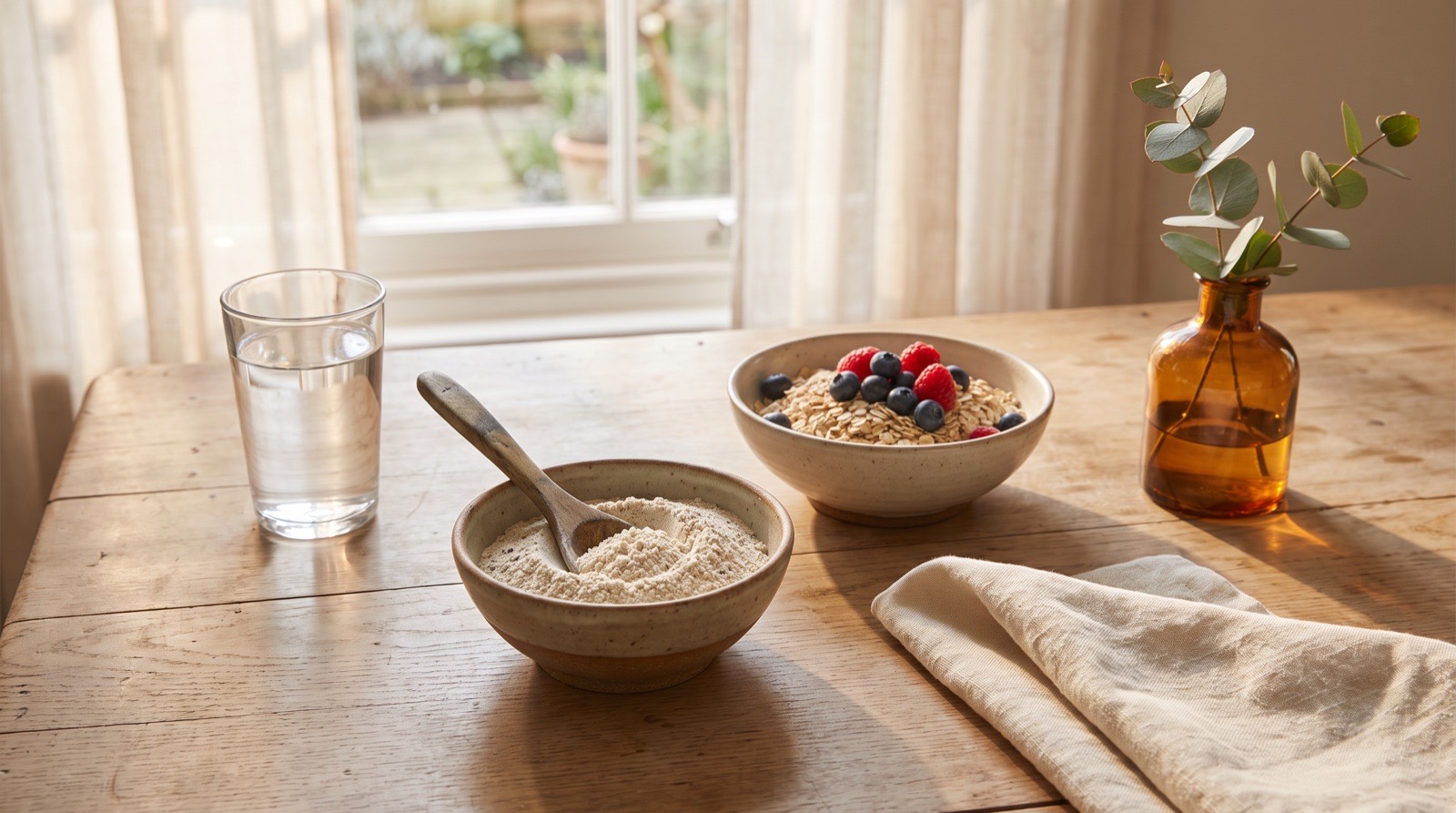
If constipation is a regular visitor, fiber is often the first fix, and the evidence backs it up. A review of 16 trials found that fiber supplements, especially psyllium, improved constipation, with the clearest benefit at doses above 10 grams a day used for at least four weeks (van der Schoot 2022). Food first is still the goal, but a psyllium supplement is a reasonable and well-studied option if whole foods are not getting you there. We compare it with PHGG, inulin, and glucomannan in our guide to the best fiber supplement for women. And if fiber alone has never solved it, our deeper look at constipation in women covers the causes almost nobody checks.
How to add fiber without the bloat
Here is the mistake almost everyone makes. They read something like this, get motivated, and double their fiber overnight. Then they feel gassy and bloated and decide fiber is not for them. That same constipation review noted more gas in the fiber groups, which is exactly what happens when you ramp up too fast (van der Schoot 2022).
The fix is boring and it works. Add fiber slowly, over a couple of weeks, so your gut bacteria have time to adjust. And drink more water as you go, since fiber needs water to do its job and move things along. Go slow, stay hydrated, and the bloat mostly stays away. If bloating is a bigger pattern for you, we break down what actually causes bloating too.
Easy ways to get more
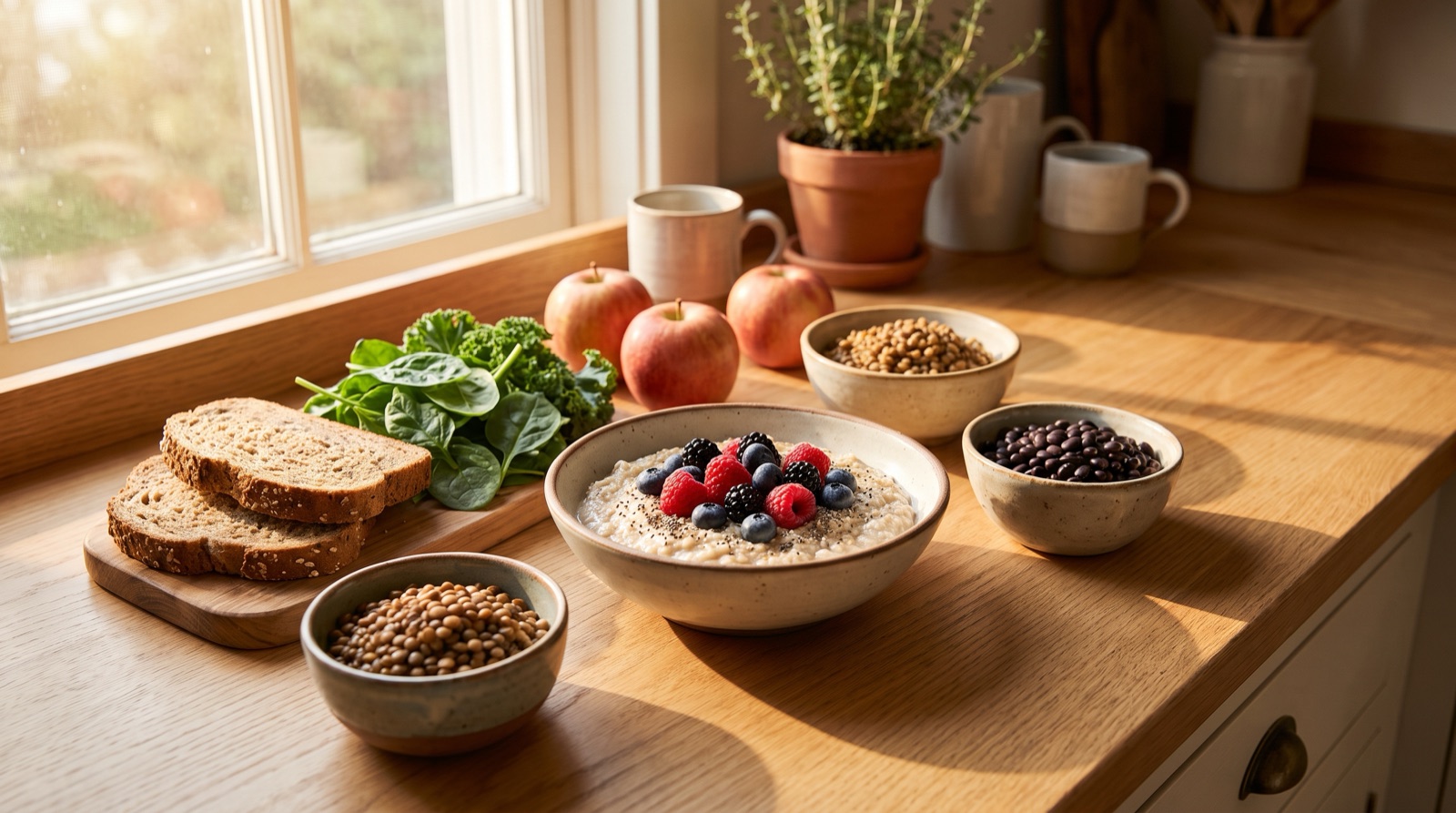
You do not need powders or special products, though psyllium can help in a pinch. Whole foods do the job and taste better. A few easy wins: start the day with oats or add berries and chia to yogurt. Keep beans and lentils on hand and toss them into soups, salads, and bowls. Leave the skins on your fruits and vegetables. Swap refined grains for whole ones, like brown rice or whole-grain bread. Keep fruit, nuts, and popcorn around for snacks. Small, steady upgrades beat one giant salad.
When to talk to your doctor
More fiber is safe and helpful for most people, but a few situations call for a check-in. If you have a digestive condition like IBS (our guide to IBS in women covers it), Crohn's, or colitis, or you have had bowel surgery, talk to your doctor before making big changes, since the right type and amount can differ. And if you have new or ongoing changes in your bathroom habits, do not just treat it with fiber. Get it checked. As always, this is general information, not personal medical advice.
The bottom line
Fiber deserves the attention it is finally getting. Most women get about half of what they need, and closing that gap is one of the simplest, best-studied things you can do for your heart, your blood sugar, and your gut. Aim for around 25 grams a day, get a mix from a variety of plants, add it slowly, and drink your water. No powder required, just a little more of the good stuff on your plate. For more like this, our gut health section is a good next stop.
This article is for general education and is not medical advice. Talk to your doctor about your own needs, especially if you have a digestive condition or new changes in your bathroom habits.
References
- Thompson HJ, Brick MA. Closing the Dietary Fiber Gap: An Ancient Solution for a 21st Century Problem. Advances in Nutrition. 2016. PMID: 27422499
- Reynolds A, et al. Carbohydrate quality and human health: a series of systematic reviews and meta-analyses. Lancet. 2019. PMID: 30638909
- Ho HVT, et al. The effect of oat beta-glucan on LDL-cholesterol, non-HDL-cholesterol and apoB for CVD risk reduction: a systematic review and meta-analysis. British Journal of Nutrition. 2016. PMID: 27724985
- van der Schoot A, et al. The Effect of Fiber Supplementation on Chronic Constipation in Adults: An Updated Systematic Review and Meta-Analysis. American Journal of Clinical Nutrition. 2022. PMID: 35816465
Common questions
How much fiber does a woman need per day?
Around 25 grams a day for most women, or roughly 14 grams for every 1,000 calories you eat. The catch is that most people fall well short. The median intake is closer to 12 to 14 grams a day, and fewer than 1 in 20 Americans hit the recommended amount, so most of us are running at about half of where we should be.
What is the difference between soluble and insoluble fiber?
Soluble fiber dissolves in water into a soft gel that helps steady blood sugar, lower cholesterol, and feed good gut bacteria. You find it in oats, beans, lentils, apples, and chia. Insoluble fiber does not dissolve. It adds bulk and helps you stay regular, and it is found in whole grains, fruit and vegetable skins, and nuts. Most whole foods have a mix of both.
Why does more fiber make me bloated and gassy?
Extra fiber usually makes you bloated and gassy because you added it too fast. When you ramp up fiber quickly, your gut bacteria produce more gas while they adjust. The fix is to add fiber slowly over a couple of weeks and drink more water as you go. Fiber needs water to move through smoothly, so hydration is part of the deal.
Do I need a fiber supplement?
Most people can hit their target with whole foods like oats, beans, lentils, fruits, vegetables, and whole grains, and that is the best place to start. But a psyllium supplement is a well-studied option if food is not getting you there or you struggle with constipation. In trials, psyllium improved regularity at doses above 10 grams a day used for at least four weeks.