SUPPLEMENTS
Vitamin D and Women: Why So Many Are Low (and What to Do)
Vitamin D gets blamed for a lot and sold as a fix for even more. Here is the calm, science-backed version: what it genuinely helps, where the claims outrun the evidence, and why testing beats guessing.
Vitamin D is one of the most talked-about supplements for women, and one of the most oversold. It gets credit for better moods, stronger bones, fewer colds, and more energy, sometimes all at once. Some of that holds up and some of it does not. The honest truth is that low vitamin D is genuinely common, and it genuinely matters when you are low, but a daily pill is not the cure-all the internet makes it out to be. Let's sort the real from the hype, so you know when vitamin D is worth your attention and when it is not.
Why so many people run low
Vitamin D is unusual because your skin makes it from sunlight, so modern life quietly works against it. We spend most of the day indoors, we cover up or wear sunscreen when we are out, and few foods contain much of it naturally. The result is widespread shortfall. In a large study of US adults, about 41 percent were vitamin D deficient, with far higher rates in people with darker skin, higher body weight, or who did not drink milk daily (Forrest, 2011). Women have their own reasons to watch it, since time spent indoors, sunscreen use, and the demands of pregnancy and breastfeeding can all pull levels down.
So being low is common, and it is worth taking seriously. The next question is what being low actually does, and here you have to be honest about which claims the evidence supports.
What vitamin D really helps, and what it does not
Start with bones, the classic role. Vitamin D helps your body absorb calcium, so it is important for the skeleton. But important for the system does not mean a supplement fixes everything. In a large trial, giving extra vitamin D to generally healthy adults who were not selected for deficiency or low bone density did not reduce fractures (LeBoff, 2022). The lesson is not that vitamin D is useless for bone, it is that topping up people who are already fine does not buy extra protection. It matters most when you are actually short. (For the whole bone picture in midlife, see what to eat in menopause to protect your bones.)
Mood is the next big claim, and here the honest read is even clearer. A large randomized trial followed adults for years and found that vitamin D3, compared with a placebo, did not lower the risk of depression or improve mood scores (Okereke, 2020). Low vitamin D and low mood can travel together, but this careful study suggests a supplement is not a reliable treatment for depression. If you are struggling, that is a conversation for your doctor, not a bottle of pills.
Immunity is where the picture is more encouraging, with a catch worth knowing. A large review found that vitamin D supplementation modestly reduced the risk of acute respiratory infections, and the protection was strongest in the people who were most deficient to begin with (Martineau, 2017). That catch is the whole theme of this article: vitamin D tends to help when it is correcting a real shortfall, and does little when your level is already healthy.
Test, do not guess
Put those threads together and a simple, sensible approach appears. Because vitamin D helps most when you are truly low, the smart move is to find out where you stand rather than blindly taking a high dose forever. (The same test-first logic applies to vitamin B12 and iron.) A simple blood test tells you your level, and your doctor can recommend a dose to correct a shortfall and then a modest amount to maintain it. This is especially worth doing if you have darker skin, spend little time in the sun, carry more body weight, are pregnant or breastfeeding, or are older, since those are the situations where low levels are most likely.
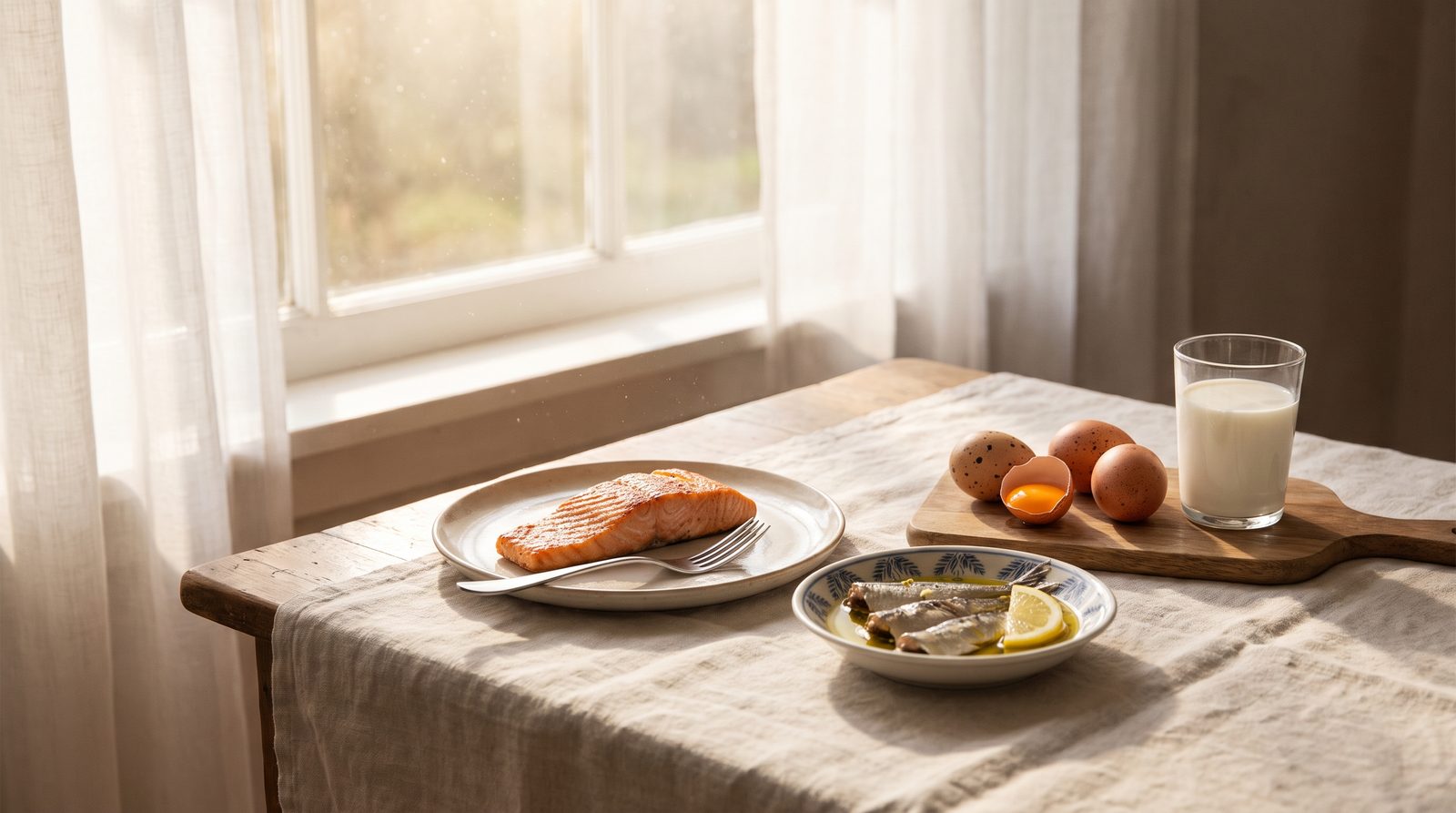
If testing is not an option right now, a standard daily dose from a basic supplement is a reasonable, low-risk middle ground for many women, and food helps too. Fatty fish like salmon and sardines, egg yolks, and fortified milk and cereals all contribute. (Fatty fish pulls double duty here, as our guide to omega-3s for women explains.) What is not wise is megadosing on your own, because more is not better with vitamin D, and very high intakes over time can cause harm. If you are past menopause, our guide to how much vitamin D women over 50 should take walks through the exact numbers and the trials on high doses.
The calm bottom line
Vitamin D is worth caring about because being low is common and does matter, especially for your bones and your defenses against infection. It is not the mood cure or the fix-everything supplement it is often sold as. Treat it as a nutrient to keep in a healthy range, not a magic bullet. Test if you can, correct a real shortfall, keep a sensible maintenance habit, and skip the megadoses. That is the honest, boring, effective version, and boring is exactly what works here. (More of the honest version lives in our supplements section.)
This article is for general education and is not medical advice. Vitamin D needs vary, and high doses can be harmful, so please talk with your doctor about testing and the right dose for you. Research cited was retrieved from PubMed.
References
- Forrest KY, Stuhldreher WL. Prevalence and correlates of vitamin D deficiency in US adults. Nutr Res. 2011. PMID: 21310306
- LeBoff MS, et al. Supplemental Vitamin D and Incident Fractures in Midlife and Older Adults. N Engl J Med. 2022. PMID: 35939577
- Okereke OI, et al. Effect of Long-term Vitamin D3 Supplementation vs Placebo on Risk of Depression or Clinically Relevant Depressive Symptoms and on Change in Mood Scores: A Randomized Clinical Trial. JAMA. 2020. PMID: 32749491
- Martineau AR, et al. Vitamin D supplementation to prevent acute respiratory tract infections: systematic review and meta-analysis of individual participant data. BMJ. 2017. PMID: 28202713
Common questions
Why are so many women low in vitamin D?
Many women are low in vitamin D because skin makes it from sunlight, and modern life works against that. We spend most of the day indoors, cover up or use sunscreen outside, and few foods contain much of it. In a large study of US adults, about 41 percent were deficient, with higher rates in people with darker skin, higher body weight, or who did not drink milk daily. Time indoors, sunscreen, pregnancy, and breastfeeding give women extra reasons to keep an eye on it.
Does vitamin D improve your mood?
The honest answer is that a supplement is not a reliable mood treatment. A large randomized trial followed adults for years and found vitamin D3, compared with a placebo, did not lower the risk of depression or improve mood scores. Low vitamin D and low mood can occur together, but topping up does not appear to fix mood on its own. If you are struggling, talk with your doctor rather than relying on a supplement.
Does vitamin D prevent fractures?
Vitamin D does not prevent fractures for people who are already fine. In a large trial, giving extra vitamin D to generally healthy adults who were not selected for deficiency or low bone density did not reduce fractures. Vitamin D still helps your body absorb calcium and matters for bone, but it does the most when it is correcting a real shortfall, not when it is added on top of an already healthy level.
Can vitamin D help with colds and infections?
There is encouraging evidence here, with a catch. A large review found vitamin D supplementation modestly reduced the risk of acute respiratory infections, and the protection was strongest in the people who were most deficient to start with. That is the recurring theme: vitamin D tends to help when it corrects a genuine shortfall and does little when your level is already healthy.
How much vitamin D should I take?
The best move is to test rather than guess, since vitamin D helps most when you are truly low. A simple blood test shows your level, and your doctor can suggest a dose to correct a shortfall and a modest amount to maintain it. If testing is not possible, a standard daily dose from a basic supplement is a reasonable middle ground, and foods like salmon, sardines, egg yolks, and fortified milk help. Do not megadose on your own, because more is not better and very high intakes can harm you.