HORMONES
What to Eat in Menopause to Protect Your Bones
Estrogen drops in menopause and bone loss picks up speed. The good news: what you eat and how you move genuinely help. Here is the calm, science-backed version, minus the fear.
Menopause changes a lot of things (we cover the metabolic side of the story separately), and one of the quietest is what happens to your bones. There is no ache, no warning, just a slow loss of strength you cannot feel. That silence is exactly why it is worth paying attention now. The reassuring part is that food and movement give you real leverage here. Let's walk through why menopause is hard on bone, and the everyday habits that actually help, minus the fear and the hard sell.
Why bones lose ground after menopause
Estrogen does more than run your cycle. It also helps protect your skeleton, keeping the constant breakdown and rebuilding of bone in balance. When estrogen falls around menopause, that balance tips toward loss, and bone can thin faster in the years right after your periods stop. In its 2021 position statement, the North American Menopause Society describes estrogen deficiency as the primary driver of postmenopausal bone loss, and it names good nutrition, especially enough protein, calcium, and vitamin D, plus regular activity, as the foundation for every woman during this stage (NAMS, 2021).
So this is not about one magic nutrient. It is about a handful of steady habits working together. Here are the ones with the best evidence behind them.
Protein: the piece most women skimp on
People think of bone as calcium, but roughly half of it is protein by volume. Protein forms the flexible scaffold that mineral hardens onto, and it also feeds the muscle that keeps you steady and lowers the odds of a fall. Older women often eat too little of it. When researchers pooled the studies, eating protein above the old recommended minimum was linked to better bone density and about an eleven percent lower risk of hip fracture in older adults (Groenendijk, 2019).
An easy target is to include a palm-sized source of protein at every meal: eggs, Greek yogurt, fish, chicken, tofu, beans, or lentils. (Our guide to protein for women covers how much you need at every age.) Spreading it across the day, rather than loading it all at dinner, helps your body use it. And no, more protein does not leach calcium from your bones. That old worry has not held up. (Collagen gets sold hard for bones too, and we weighed the collagen evidence honestly.)
Calcium: get it from food first
Calcium is the mineral your bones are built from, and menopause is not the time to run short. But how you get it matters. The honest read on supplements is more careful than the ads suggest. A review of skeletal health found that calcium pills alone are not recommended for fracture prevention in the general postmenopausal population, and that food is the better source, with supplements saved for women whose intake or absorption is genuinely low (Capozzi, 2020).
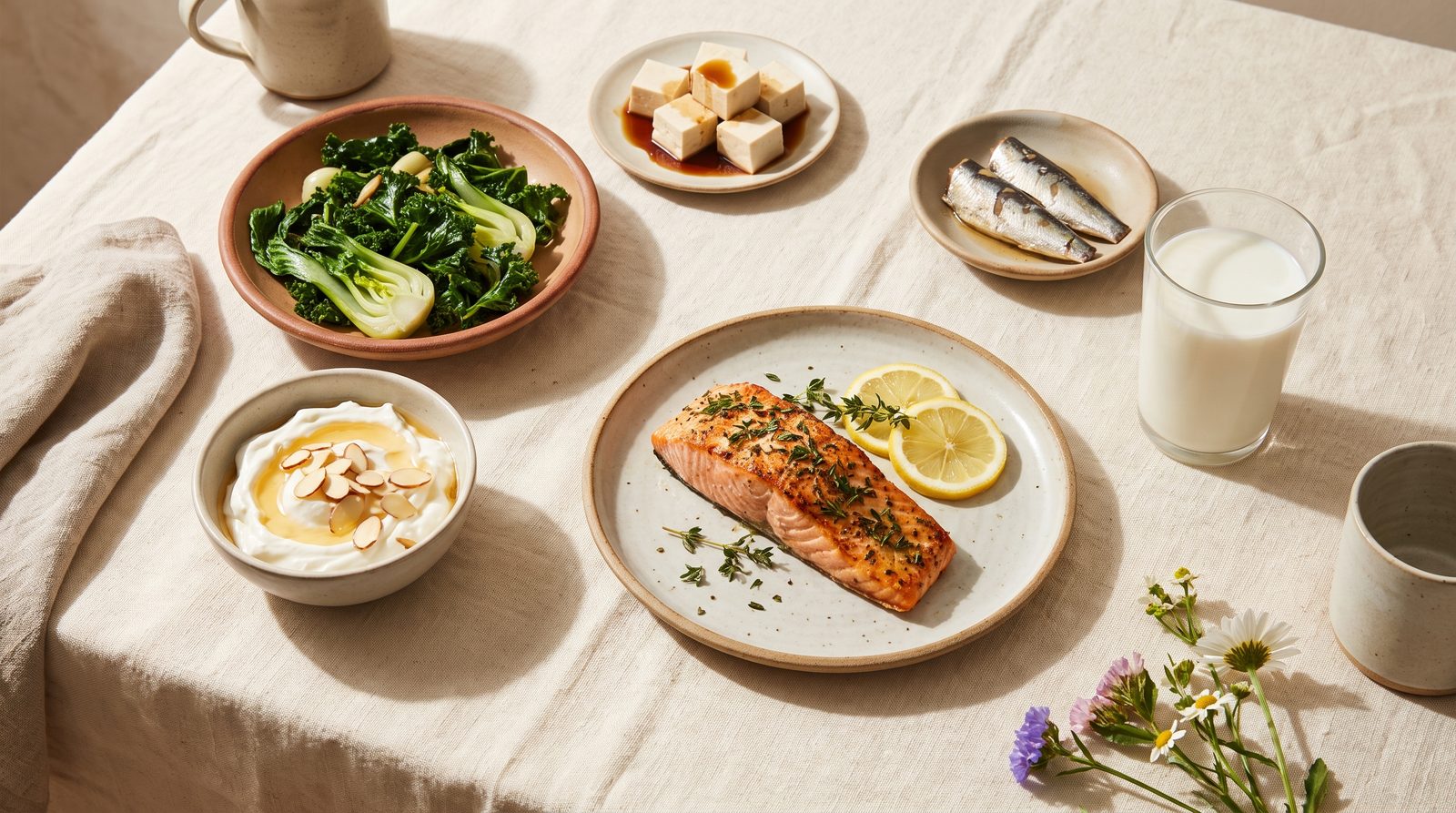
So aim to hit your calcium through your plate: dairy like yogurt, milk, and cheese, plus canned salmon or sardines with the soft bones, tofu set with calcium, and leafy greens like kale and bok choy. Food gives you calcium alongside protein and other nutrients, and it skips the downsides that can come with high-dose pills.
Vitamin D: the helper that lets calcium work
Vitamin D is what allows your gut to absorb the calcium you eat, so low levels quietly undercut the rest of your effort. It is genuinely important for women who are deficient or at higher risk (Capozzi, 2020). Here is the honest nuance, though. A recent systematic review found that vitamin D, alone or with calcium, reliably improved vitamin D status and markers of bone turnover in postmenopausal women, but the reviewers could not confirm that it cut fracture risk in women who did not already have osteoporosis (Reis, 2023).
The takeaway is not to skip it, it is to be realistic. Vitamin D supports the system rather than working like a fracture shield on its own. Sunlight and foods like fatty fish and fortified dairy help, and if you are unsure where you stand, a simple blood test can tell you whether a supplement makes sense. (We cover why so many women are low in vitamin D separately.)
Movement is not optional: bone responds to load
Diet builds the raw materials, but bone gets stronger when you ask it to work. The signal comes from weight-bearing and resistance movement, the kind where your muscles pull on bone and your body carries load. In a randomized trial of early postmenopausal women with low bone density, a program of high-impact weight-bearing and heavier resistance training preserved and slightly improved bone density at the spine, while a low-intensity comparison group kept losing it, and the training group also gained muscle and strength (Hettchen, 2021).
You do not need a gym full of equipment. Lifting challenging weights a couple of times a week, brisk walking, stair climbing, and balance work all count, and the strength you build doubles as fall insurance. If you are new to this or have a bone diagnosis already, get guidance on safe form before you push the intensity.
When to talk to your doctor
These habits are about protecting healthy bone, not treating a diagnosis on your own. If you have already broken a bone from a minor fall, have a family history of osteoporosis, or are past 65, ask about a bone density scan, called a DEXA. It is quick and painless, and it tells you where you actually stand. For women who already have osteoporosis or a high fracture risk, food and movement still matter, but medication may be part of the plan too. That is a conversation to have with your doctor, not a decision to make from a blog.
The calm bottom line
Menopause tips your bones toward loss, but you are not powerless. Eat protein at every meal, get your calcium from food first, keep your vitamin D in a healthy range, and give your bones a reason to stay strong by carrying and lifting real load. None of it is dramatic, and that is the point. Steady, boring habits, started now, are what keep you upright and independent for the decades ahead. More midlife guides live in our hormones section.
This article is for general education and is not medical advice. If you are concerned about your bone health or thinking about a supplement, please talk with your doctor and ask whether testing is right for you. Research cited was retrieved from PubMed.
References
- "Management of osteoporosis in postmenopausal women: the 2021 position statement of The North American Menopause Society." Menopause. 2021. PMID: 34448749
- Groenendijk I, et al. High Versus Low Dietary Protein Intake and Bone Health in Older Adults: a Systematic Review and Meta-Analysis. Comput Struct Biotechnol J. 2019. PMID: 31462966
- Capozzi A, et al. Calcium, vitamin D, vitamin K2, and magnesium supplementation and skeletal health. Maturitas. 2020. PMID: 32972636
- Reis AR, et al. Supplementation of vitamin D isolated or calcium-associated with bone remodeling and fracture risk in postmenopausal women without osteoporosis: A systematic review of randomized clinical trials. Nutrition. 2023. PMID: 37544189
- Hettchen M, et al. Changes in Menopausal Risk Factors in Early Postmenopausal Osteopenic Women After 13 Months of High-Intensity Exercise: The Randomized Controlled ACTLIFE-RCT. Clin Interv Aging. 2021. PMID: 33469276
Common questions
Why does bone loss speed up after menopause?
Estrogen helps keep bone breakdown and rebuilding in balance. When estrogen falls around menopause, that balance tips toward loss, so bone can thin faster in the years right after your periods stop. The North American Menopause Society describes estrogen deficiency as the primary driver of postmenopausal bone loss, which is why nutrition and movement matter most during this stage.
How much protein do I need to protect my bones?
To protect your bones, you need more protein than many women eat. About half of bone by volume is protein, and it also feeds the muscle that keeps you steady. When researchers pooled the studies, protein intake above the old recommended minimum was linked to better bone density and roughly an eleven percent lower risk of hip fracture in older adults. A simple target is a palm-sized protein source at every meal, spread across the day.
Should I take a calcium supplement in menopause?
Food first is the honest answer. A review of skeletal health found calcium pills alone are not recommended for fracture prevention in the general postmenopausal population, with supplements saved for women whose intake or absorption is genuinely low. Aim to get calcium from dairy, canned fish with soft bones, calcium-set tofu, and leafy greens, and talk to your doctor before adding a high-dose supplement.
Does vitamin D prevent fractures?
Vitamin D helps your body absorb calcium and matters most for women who are low or at risk, but it is not a fracture shield on its own. A recent systematic review found vitamin D, with or without calcium, improved vitamin D status and bone-turnover markers in postmenopausal women, yet the reviewers could not confirm it reduced fractures in women without osteoporosis. Keep your level in a healthy range and test if you are unsure.
What kind of exercise builds bone after menopause?
Weight-bearing and resistance movement, the kind where muscles pull on bone and your body carries load. In a randomized trial of early postmenopausal women with low bone density, high-impact and heavier resistance training preserved and slightly improved spine bone density while a low-intensity group kept losing it. Lifting challenging weights a couple of times a week, brisk walking, stairs, and balance work all count.