Supplements
Eating Well on GLP-1 Medications: Protect Your Muscle, Ease the Side Effects
GLP-1 medications shrink your appetite, which is the point and also the catch. Here is how to hold onto muscle, hit your protein, and settle your stomach while you eat far less than before.
GLP-1 medications like semaglutide have changed the weight-loss conversation, and for good reason. In the large STEP 1 trial, adults taking weekly semaglutide lost about 15 percent of their body weight over 68 weeks, far more than placebo (PMID: 33567185). That is a real result. But there is a catch that does not fit on a before-and-after photo: when you eat much less, you do not lose only fat. You lose some muscle too. This guide is about eating in a way that protects your muscle, keeps you nourished, and settles the common side effects, all while your appetite is turned way down. (Curious how the hormone itself works? See what actually raises GLP-1 naturally.)
The part nobody puts on the ad
Any time you lose a lot of weight, whether from a medication, surgery, or plain old dieting, some of what you lose is lean mass. Lean mass is your muscle, and it does not grow back as easily as fat comes off. A review of GLP-1 therapies found that a meaningful share of the weight lost can come from lean tissue, and it laid out ways to blunt that, chiefly getting enough protein and doing resistance exercise (PMID: 38937282).
Why care about muscle? Because muscle is what lets you carry groceries, climb stairs, and stay steady on your feet as you age. It also helps keep your metabolism up. Losing fat while keeping muscle is a good outcome. Losing fat while also giving away hard-won muscle is a worse one, and it is avoidable. The two levers below are the ones that actually move the needle.
Lever one: protein, and more of it than you think
When you are eating far less overall, protein has to be the priority, not the thing you skip because you are not hungry. In a randomized trial, people cutting calories to lose weight held onto more of their fat-free mass when their diet was higher in protein rather than at the standard recommended amount (PMID: 23739654). Protein is the raw material your body uses to defend muscle while the rest of the diet shrinks.
How much? A widely cited expert panel recommends older adults get at least 1.0 to 1.2 grams of protein per kilogram of body weight a day for muscle health, and more when losing weight or dealing with illness (PMID: 23867520). For a lot of women, that lands somewhere around 80 to 110 grams a day, which can feel like a stretch when a GLP-1 has shrunk your appetite. A few things that help:
- Eat protein first at each meal, before it fills you up on other things. (Our guide to protein for women covers targets and easy sources.)
- Spread it across the day. Your body uses protein better in steady doses than in one big dinner.
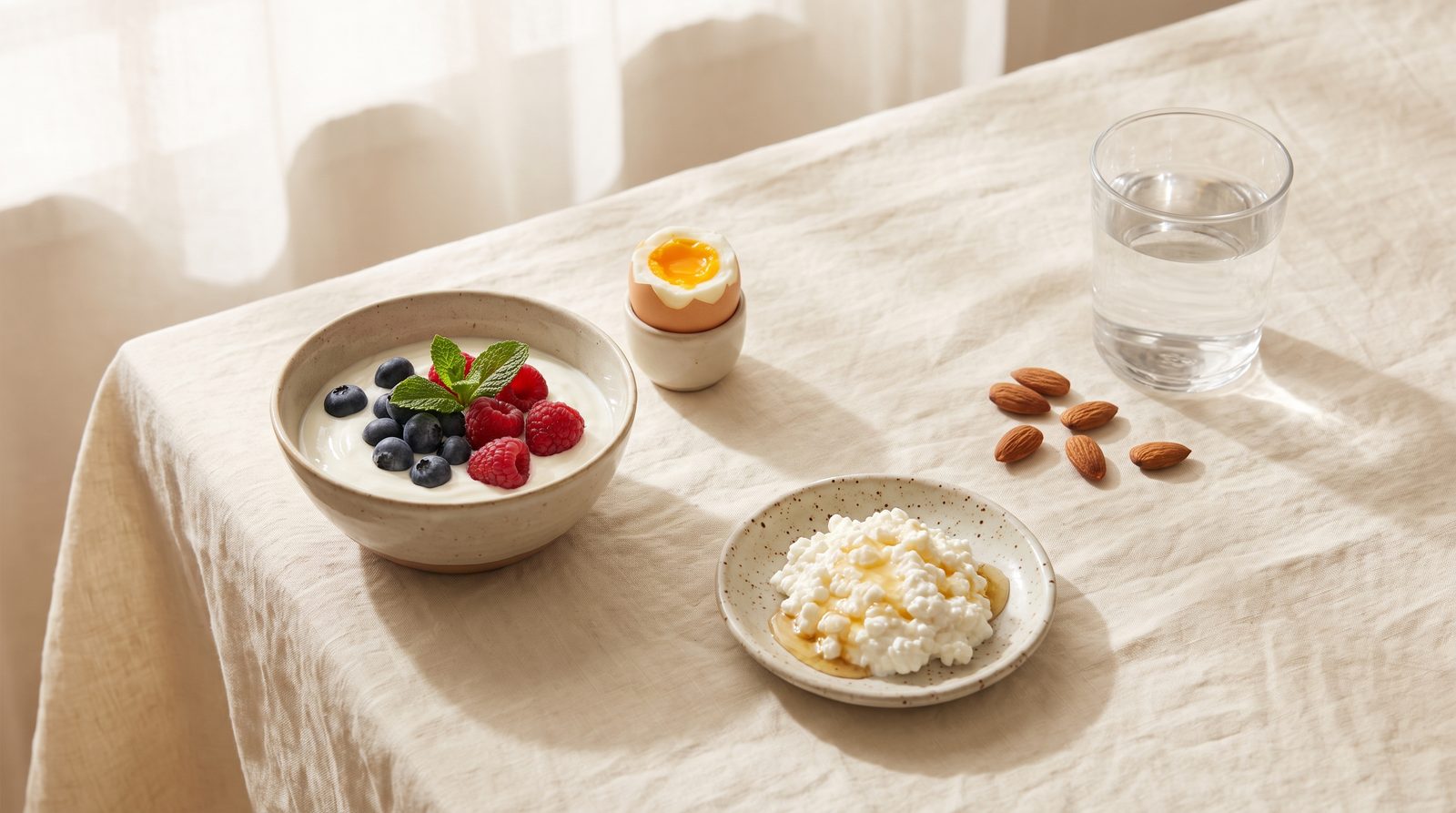
- Lean on easy, filling sources: Greek yogurt, eggs, cottage cheese, fish, chicken, tofu, beans, and a protein shake on days nothing sounds good.
Lever two: lift something heavy
Food gives your body the material to keep muscle. Resistance training gives it the reason to. In a study of dieting older adults with obesity, those who added resistance exercise, or a mix of resistance and aerobic exercise, preserved far more of their lean mass and physical function than those who dieted without it (PMID: 28514618). Diet alone dropped their weight, but at a higher cost to muscle.
You do not need a gym or a fancy program. Two or three sessions a week of basic strength work, using bands, dumbbells, machines, or your own body weight, is enough to send the signal. Squats to a chair, pushing motions, pulling motions, and carrying something heavy across the room all count. Pair that with the protein above and you have the two things that best protect muscle on a GLP-1. (Some women also ask about creatine, and here is what it does and does not do.)
Easing the side effects so you can actually eat
Nausea, fullness, and constipation are the most common complaints on these medications, and they can make the protein goal harder. None of the tips below are medication advice, just gentler ways to eat:
- For nausea: smaller meals more often beats three big ones. Bland, lower-fat foods tend to sit easier. Eat slowly and stop before you feel stuffed, because the fullness sneaks up.
- For constipation: add fiber gradually from fruit, vegetables, beans, and whole grains, and drink more water than feels necessary. A sudden pile of fiber on a low-food day can backfire and add to the bloat, so use the gentle ramp from our fiber guide.
- For low appetite overall: treat meals like appointments rather than waiting to feel hungry, since the hunger cue is exactly what the medication quiets. Liquid calories like a protein smoothie can carry a lot of nutrition when solid food feels like too much.
Do not forget the everyday nutrients
When your total food drops sharply, it gets harder to hit your vitamins and minerals, not just your protein. This is a good time to keep meals colorful and varied rather than living on a few safe foods, and to make sure you are getting enough fluid and electrolytes, especially if nausea has cut into how much you drink. If your eating has narrowed a lot, it is worth asking your doctor whether a simple daily multivitamin makes sense for you. This is general information, and your prescriber knows your situation best.
The honest bottom line
GLP-1 medications are a genuinely effective tool, and they are not a free pass on nutrition. The scale will move on its own. What you control is the quality of that weight loss: keep your muscle by prioritizing protein and doing a little strength work, ease the side effects so you can keep eating well, and mind the everyday nutrients that slip when you eat less. Do those, and you come out the other side lighter and still strong, which is the whole point. (More practical guides live in our supplements section.)
References
- Wilding JPH, et al. Once-Weekly Semaglutide in Adults with Overweight or Obesity. N Engl J Med. 2021. PMID: 33567185
- Neeland IJ, et al. Changes in lean body mass with glucagon-like peptide-1-based therapies and mitigation strategies. Diabetes Obes Metab. 2024. PMID: 38937282
- Pasiakos SM, et al. Effects of high-protein diets on fat-free mass and muscle protein synthesis following weight loss: a randomized controlled trial. FASEB J. 2013. PMID: 23739654
- Villareal DT, et al. Aerobic or Resistance Exercise, or Both, in Dieting Obese Older Adults. N Engl J Med. 2017. PMID: 28514618
- Bauer J, et al. Evidence-based recommendations for optimal dietary protein intake in older people: a position paper from the PROT-AGE Study Group. J Am Med Dir Assoc. 2013. PMID: 23867520
This article is for education only and is not medical advice. GLP-1 medications should be started and managed by your doctor, and any question about your dose, side effects, or supplements belongs with your prescriber. Research cited was retrieved from PubMed.
Common questions
Do you lose muscle on GLP-1 medications like semaglutide?
You do lose some muscle on GLP-1 medications. Any large weight loss, from medication, surgery, or dieting, includes some lean mass, which is mostly muscle. A review of GLP-1 therapies found a meaningful share of the weight lost can come from lean tissue, and it pointed to two ways to blunt that: getting enough protein and doing resistance exercise. Losing fat while keeping muscle is the goal, and it is achievable with a bit of planning.
How much protein should I eat on a GLP-1 medication?
On a GLP-1 medication, eat more protein than the bare minimum, and make it the priority when your appetite is low. An expert panel recommends at least 1.0 to 1.2 grams of protein per kilogram of body weight a day for muscle health, with more when losing weight. For many women that is roughly 80 to 110 grams a day. Eat protein first at each meal, spread it across the day, and lean on easy sources like Greek yogurt, eggs, cottage cheese, fish, and a shake on low-appetite days.
What kind of exercise protects muscle while losing weight?
Resistance training, meaning strength work, is the kind of exercise that protects muscle while you lose weight. In a study of dieting older adults, those who added resistance exercise preserved far more lean mass and physical function than those who dieted alone. You do not need a gym. Two or three sessions a week using bands, dumbbells, machines, or your body weight is enough. Squats to a chair, pushing and pulling motions, and carrying something heavy all count.
How do I deal with nausea and constipation on a GLP-1?
For nausea, smaller meals more often, blander and lower-fat foods, and eating slowly tend to help, since fullness sneaks up. For constipation, add fiber gradually from fruit, vegetables, beans, and whole grains, and drink more water than feels necessary. A sudden pile of fiber on a low-food day can backfire. These are gentler ways to eat, not medication advice. Talk to your doctor if side effects are severe or persistent.
Do I need supplements while taking a GLP-1 medication?
You may need supplements while taking a GLP-1 medication. When your total food drops sharply, it gets harder to hit your vitamins and minerals, not just your protein. Keep meals colorful and varied rather than living on a few safe foods, and stay on top of fluids and electrolytes, especially if nausea has cut how much you drink. If your eating has narrowed a lot, ask your doctor whether a simple daily multivitamin makes sense for you.