Hormones
Endometriosis and Diet: What the Evidence Actually Supports
Most endometriosis diet advice is built on studies about risk, not relief. Here is the honest version, including the one dietary change with real symptom data behind it.
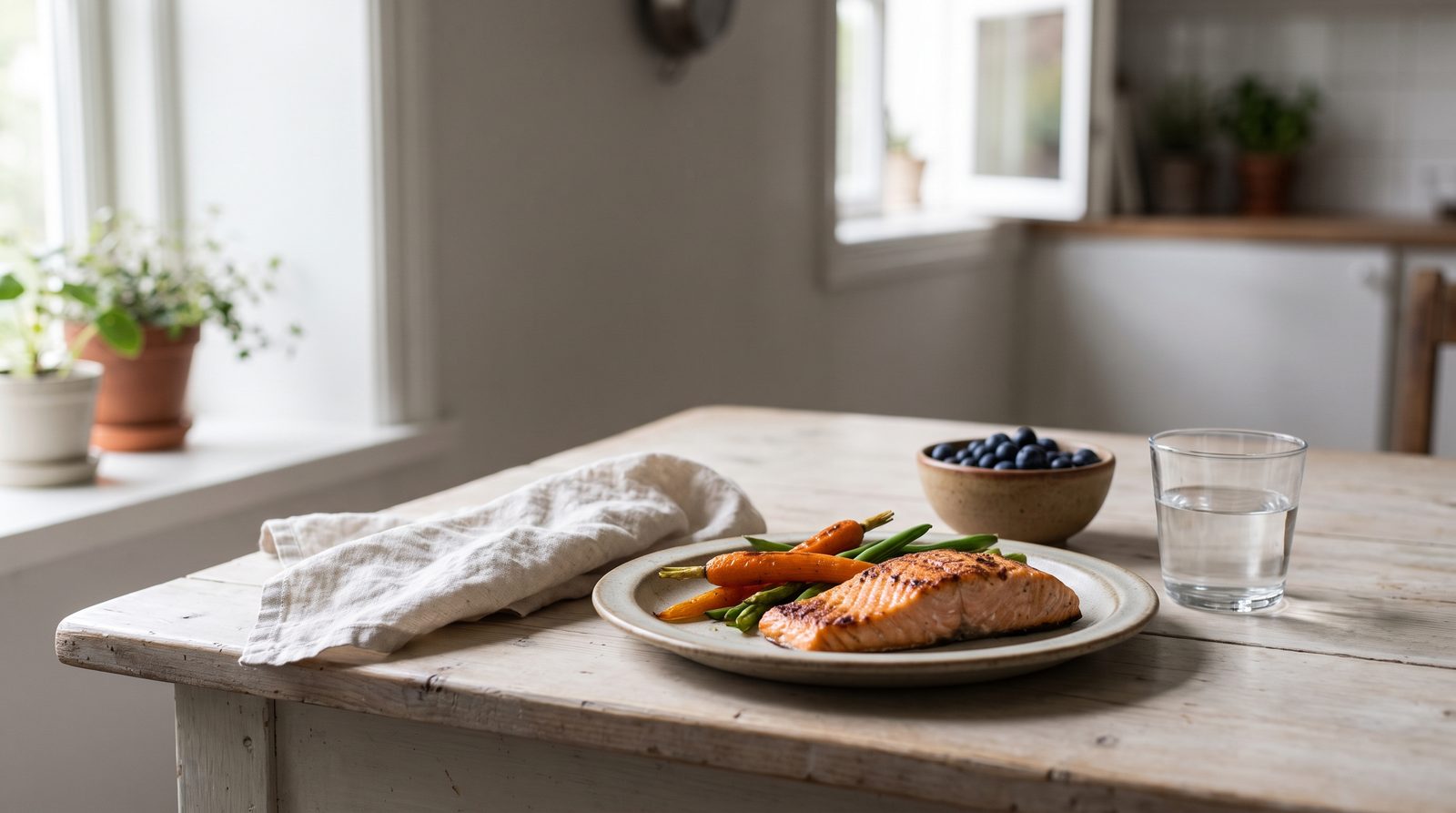
If you have endometriosis, you have almost certainly been handed a food rule by someone. Cut gluten. Cut dairy. Cut all red meat. Go anti-inflammatory, whatever that means this month.
Some of that has research behind it. A lot of it does not. And the difference matters, because restrictive eating is not free. It costs time, money, and mental energy that a person managing chronic pain does not have to spare.
First, what we are working with
Endometriosis is tissue similar to the uterine lining growing outside the uterus. It affects roughly 1 in 10 women of reproductive age, it can cause severe period pain, pain during sex, bowel symptoms, and infertility, and there is no cure (Zondervan, 2020).
That last part is why diet advice fills the gap. When medical options are limited and waits are long, food feels like something you can control today.
Here is the single most important thing to understand before reading any of the numbers below. Most of the diet research on endometriosis studied whether food affects your chance of developing it. Very little studied whether changing your diet after diagnosis makes you feel better. Those are different questions, and headlines blur them constantly.
Red meat: the strongest signal in the risk data
This one comes from a large, long study. Researchers followed 81,908 women in the Nurses' Health Study II from 1991 to 2013 and tracked 3,800 confirmed cases of endometriosis.
Women eating more than two servings of red meat a day had a 56 percent higher risk than women eating one serving a week or less. The link was strongest for unprocessed red meat. Poultry, fish, shellfish, and eggs showed no link either way (Yamamoto, 2018).
Two servings a day is a lot, so this is not an argument that a burger on Friday causes endometriosis. It is a signal that heavy red meat intake tracks with higher risk, possibly through effects on hormone levels. And because this is observational, it cannot prove that meat caused it.
The fat story: which kind, not how much
The same research group looked at dietary fat over 12 years and 1,199 confirmed cases. Total fat intake was not associated with endometriosis at all. The type was.
Women in the top fifth for long chain omega-3 intake were 22 percent less likely to be diagnosed. Women in the top fifth for trans fat intake were 48 percent more likely (Missmer, 2010).
Trans fats have largely been removed from the food supply since that study ran, which is good news you already benefited from without doing anything. The omega-3 side is still actionable: fatty fish a couple of times a week, or a supplement if fish is not happening. We go deeper on dose and forms in our omega-3 guide.
Dairy, and the surprise inside it
Most endometriosis advice online tells you to cut dairy. The largest study on the question found the opposite pattern.
Across 70,556 women and 1,385 confirmed cases, those eating more than three servings of dairy a day were 18 percent less likely to be diagnosed than those eating two servings. Women with the highest predicted vitamin D levels had a 24 percent lower risk than those with the lowest (Harris, 2013).
The vitamin D piece is probably doing real work here, since dairy is fortified with it and vitamin D helps regulate immune activity. It is worth knowing your level rather than guessing. More on that in our vitamin D piece.
None of this means dairy is required. If dairy genuinely makes you feel worse, that experience is real and it is yours. It does mean the blanket rule to cut it is not supported by the best available data.
The one dietary change with real symptom evidence
Here is where the picture gets more useful, and it is not the change most people expect.
Gut symptoms and endometriosis overlap heavily. In a group of 160 women meeting the criteria for irritable bowel syndrome, 36 percent also had endometriosis. Everyone was taught a low FODMAP diet, which limits certain fermentable carbohydrates that pull water into the gut and ferment quickly.
After four weeks, 72 percent of the women with endometriosis reported their bowel symptoms improved by more than half, compared with 49 percent of those with IBS alone (Moore, 2017).
Read what that does and does not say. It improved bowel symptoms. It was not measuring pelvic pain or the disease itself. But for the bloating, cramping, and unpredictable bathroom trips that ride along with endometriosis, this is the most encouraging finding in the whole area. Our IBS guide covers how the low FODMAP approach actually works, including the part most people skip, which is reintroducing foods afterward rather than staying restricted forever.
Antioxidants and pain: small, promising, not settled
One randomized placebo-controlled trial gave 59 women with pelvic pain and endometriosis either vitamin E at 1,200 IU plus vitamin C at 1,000 mg, or a placebo, daily for eight weeks.
Everyday pain improved in 43 percent of the treated group compared with none in the placebo group. Period pain improved in 37 percent and pain with sex in 24 percent. Inflammatory markers in the pelvic fluid dropped too (Santanam, 2013).
That is a genuine randomized result, which puts it above almost everything else here. It is also 59 people in one trial, and 1,200 IU of vitamin E is a high dose that can interact with blood thinners. This is worth a conversation with your doctor, not a self-prescribed purchase.
Gluten: the popular one with the weakest support
Cutting gluten is probably the most common endometriosis diet recommendation online. The study behind it is worth looking at directly, and our full breakdown of what the gluten and endometriosis research actually shows goes through its limits in detail.
207 women with severe endometriosis pain went gluten free for 12 months. At the end, 75 percent reported significant improvement in pain and quality of life (Marziali, 2012).
Now the problems. There was no control group, nobody was blinded, it was retrospective, and everyone knew they were making a change they hoped would work. Over 12 months, with a condition whose symptoms naturally rise and fall, a 75 percent improvement rate with no comparison group tells you very little.
If you have celiac disease, gluten is not optional. If you tried gluten free and feel better, keep doing what works for you. But the evidence does not support telling every woman with endometriosis to drop gluten.
What a careful review concluded
A systematic review pulled together every study on diet and endometriosis it could find. It located nine human studies. Only two were randomized controlled trials. Most carried a moderate or high risk of bias, largely because diet trials are genuinely hard to run well (Nirgianakis, 2022).
Their conclusion was not that diet does nothing. It was that the research is not strong enough yet to give confident recommendations, and that better trials are needed.
Anyone selling you certainty about endometriosis and food is ahead of the science.
A reasonable place to land
Pulling it together, in rough order of how much evidence supports each:
Try a low FODMAP approach if gut symptoms are part of your picture. It has the best symptom data, and it works best with a dietitian who will walk you back out of it rather than leaving you restricted.
Get omega-3s regularly. Fatty fish twice a week, or a supplement. Low risk, decent supporting data, useful for other reasons anyway.
Know your vitamin D level. Ask for the test rather than guessing at a dose.
Ease off very heavy red meat intake. Not zero. The signal was at more than two servings a day.
Keep fiber up and varied. It supports the gut symptoms that so often travel with this, and it helps your body clear estrogen. See our fiber guide.
Skip the blanket eliminations unless you have tested them for yourself and they clearly help. Cutting gluten and dairy at the same time as everything else tells you nothing about which change mattered.
The part worth saying out loud
Diet is not a treatment for endometriosis. It has never been shown to shrink a lesion or reverse the disease, and framing it as a cure quietly shifts blame onto women for a condition they did not cause.
What food can do is make some days more livable, especially the gut symptoms. That is a smaller promise than most of the internet makes, and it has the advantage of being true.
Change one thing at a time. Give it a few weeks. Keep what helps.
This article is for general education and is not medical advice. Endometriosis needs proper diagnosis and care. Talk with your doctor or a registered dietitian before starting a restrictive diet or a high dose supplement, especially alongside other treatment. Research cited was retrieved from PubMed.
References
- Zondervan KT, Becker CM, Missmer SA. Endometriosis. New England Journal of Medicine. 2020. PMID: 32212520
- Yamamoto A, et al. A prospective cohort study of meat and fish consumption and endometriosis risk. American Journal of Obstetrics and Gynecology. 2018. PMID: 29870739
- Missmer SA, et al. A prospective study of dietary fat consumption and endometriosis risk. Human Reproduction. 2010. PMID: 20332166
- Harris HR, et al. Dairy-food, calcium, magnesium, and vitamin D intake and endometriosis: a prospective cohort study. American Journal of Epidemiology. 2013. PMID: 23380045
- Moore JS, et al. Endometriosis in patients with irritable bowel syndrome: specific symptomatic and demographic profile, and response to the low FODMAP diet. Australian and New Zealand Journal of Obstetrics and Gynaecology. 2017. PMID: 28303579
- Santanam N, et al. Antioxidant supplementation reduces endometriosis-related pelvic pain in humans. Translational Research. 2013. PMID: 22728166
- Marziali M, et al. Gluten-free diet: a new strategy for management of painful endometriosis related symptoms? Minerva Chirurgica. 2012. PMID: 23334113
- Nirgianakis K, et al. Effectiveness of dietary interventions in the treatment of endometriosis: a systematic review. Reproductive Sciences. 2022. PMID: 33761124
Common questions
Does cutting gluten help endometriosis?
The evidence is much weaker than its popularity suggests. The often-cited study followed 207 women on a gluten free diet for 12 months, and 75 percent reported less pain. But there was no control group, nobody was blinded, and it was looked at after the fact. With a condition whose symptoms naturally come and go, that design cannot separate the diet from time, hope, and everything else that changed. If you have celiac disease, gluten is not optional. If you tried it and clearly feel better, keep going. There is just no good basis for telling every woman with endometriosis to cut it.
Should I stop eating dairy if I have endometriosis?
The largest study on this found the opposite of the popular advice. Among 70,556 women, those eating more than three servings of dairy a day were 18 percent less likely to be diagnosed with endometriosis than those eating two servings, and women with the highest predicted vitamin D levels had 24 percent lower risk. That is about risk of developing it, not about treating it, and it does not mean dairy is required. But cutting dairy as a blanket rule is not supported by the best data we have.
Which diet change has the most evidence for endometriosis symptoms?
A low FODMAP approach, and specifically for gut symptoms. In a group of women with irritable bowel syndrome, 72 percent of those who also had endometriosis reported their bowel symptoms improved by more than half after four weeks, compared with 49 percent of those with IBS alone. It was not measuring pelvic pain or the disease itself. Work with a dietitian if you try it, because the reintroduction phase matters as much as the restriction phase.
Does red meat cause endometriosis?
No study can show cause here, only association. In a large prospective study of 81,908 women, those eating more than two servings of red meat a day had a 56 percent higher risk of diagnosed endometriosis than those eating one serving a week or less. Poultry, fish, shellfish, and eggs showed no link. Two servings a day is a high intake, so this is not a reason to fear an occasional steak. It is a reason to notice if red meat is a daily staple.
Can diet cure endometriosis?
Diet cannot cure endometriosis. No diet has been shown to shrink lesions or reverse the disease, and a systematic review found only two randomized trials in the whole area, most studies carrying a moderate to high risk of bias. Food can make some days more comfortable, especially the digestive symptoms that often travel with endometriosis. Treating it as a cure is not supported, and it quietly puts blame on women for a condition they did not cause.