PCOS
Inositol for PCOS: What the Trials Actually Show
Inositol is everywhere in PCOS advice, and the research behind it is more mixed than the marketing suggests. Here is what the trials found for periods, hormones, and getting pregnant, and what they could not show.
If you have PCOS, you have probably been told to try inositol. It comes up in every forum, every comment section, and on the label of half the PCOS supplements on the shelf. It is usually described as a gentle, natural alternative to metformin that fixes your cycles and your hormones. That description is part right and part sales pitch. Inositol does have real trials behind it, more than most supplements can claim, and some of the findings are genuinely encouraging. But the quality of that research varies a lot, and the biggest, most careful reviews are more cautious than the marketing.
What inositol is and why PCOS came up
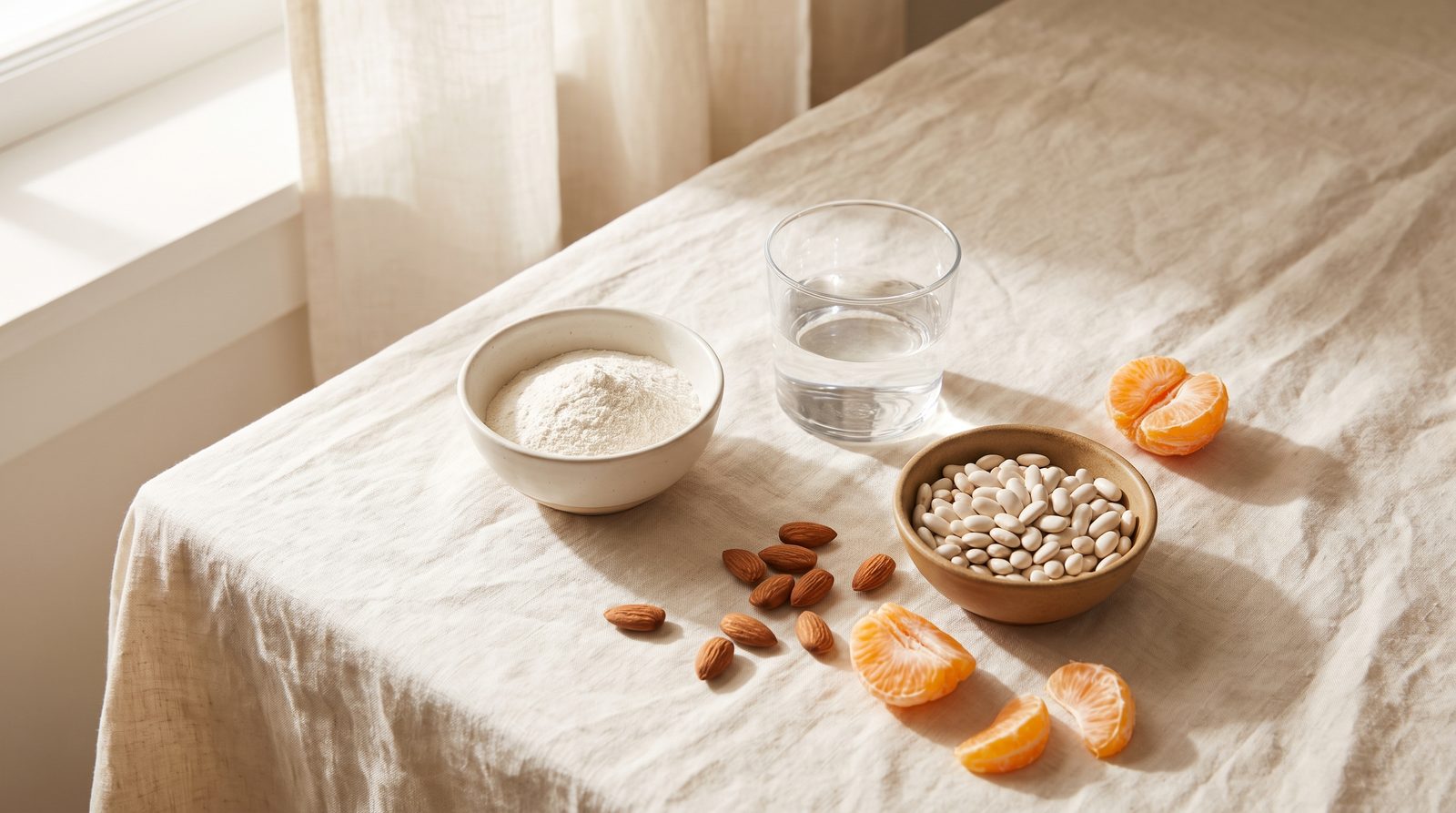
Inositol is a sugar-like compound your body makes and also gets from food, in beans, grains, nuts, and fruit. The two forms you see on labels are myo-inositol and D-chiro-inositol. They act as messengers inside your cells, including in the pathway that helps insulin do its job.
That is the whole reason inositol entered the PCOS conversation. Insulin resistance is common in PCOS, and it feeds the cycle that drives irregular periods and higher androgen levels. (We explain insulin resistance without the fear, and we cover how PCOS and your gut connect too.) If a supplement could help your cells respond to insulin better, the thinking goes, it might ease the rest. It is a sensible idea. The question is whether it holds up when researchers actually test it.
The most encouraging finding: cycles
The strongest signal in the research is about periods. One review pooled 26 randomized trials covering 1,691 women with PCOS and found that women taking inositol were about 1.8 times more likely to have a regular menstrual cycle than women taking a placebo. The same review found small improvements in body mass index, free and total testosterone, and blood sugar measures, and it reported that inositol held its own against metformin on most of the outcomes measured (Greff, 2023).
Cycle regularity is not a small thing. For many women with PCOS it is the most frustrating part of the condition and the clearest sign that something has shifted. So this is a real, meaningful result, and it is why inositol earned its reputation in the first place.
There is also some evidence for pairing rather than swapping. A review of six trials comparing metformin plus inositol against metformin alone found the combination was linked to more regular cycles and a small drop in hirsutism scores, which measure unwanted hair growth (Kelly, 2024). Those were small studies over three to six months, so treat it as a hint rather than a settled answer, but it is worth knowing that inositol is not necessarily an either-or against medication.
The careful reviews are more cautious
Here is where the story gets more complicated, and where most articles stop reading. When the researchers behind the 2023 international PCOS guidelines did their own systematic review, they went through 30 trials covering 2,230 women and came to a noticeably cooler conclusion. They found evidence of benefit for some metabolic measures, and possible benefit from D-chiro-inositol for ovulation, but they judged that inositol may have no effect on several other outcomes. Their summary was direct: the evidence supporting inositol in PCOS is limited and inconclusive, and decisions should be made with your clinician while acknowledging that uncertainty (Fitz, 2024).
Why would two reviews of overlapping research land differently? Mostly because of how strictly each one weighed study quality. Many inositol trials are small, short, and not always well reported, and stricter methods give those studies less weight. That does not make the encouraging findings fake. It means the confidence behind them is lower than a supplement label would ever admit.
The same review did find one clear practical advantage. Myo-inositol likely causes fewer digestive side effects than metformin, and the side effects it does cause tend to be mild and short lived (Fitz, 2024). For anyone who has struggled with metformin's stomach effects, that is genuinely useful information to bring to your doctor.
Fertility is the weakest part of the case
Inositol is often sold to women trying to conceive, and this is where the evidence is thinnest. A Cochrane review looked at 13 trials involving 1,472 women with PCOS who were having trouble conceiving, most of them taking myo-inositol before IVF. The reviewers concluded they could not tell whether myo-inositol improved live birth rates or clinical pregnancy rates, and they rated the evidence low to very low quality (Showell, 2018).
Read that carefully, because it is easy to misread. It does not say inositol fails. It says the studies were not good enough to answer the question, mostly because they were small and often did not even report the outcomes that matter most, like whether a baby was born. If you are trying to conceive, that uncertainty is exactly the reason to make this decision with your doctor rather than a supplement ad.
So should you take it?
Inositol is a reasonable thing to discuss with your doctor, especially if irregular cycles are your main concern, or if metformin has been hard on your stomach. It has more trial evidence behind it than most PCOS supplements, and it appears to be well tolerated. (We rank it against berberine, vitamin D, omega-3, and NAC in our guide to the best supplements for PCOS, compared honestly.) Most studies used myo-inositol, often in a 40 to 1 ratio with D-chiro-inositol, and results took a few months to appear, so this is not something you judge after two weeks.
What it is not is a cure or a replacement for the basics. Nothing in this research suggests inositol undoes PCOS. Food still matters (we compare low GI, intermittent fasting, and keto in what the PCOS weight loss diet trials actually found), along with sleep, movement, protein and fiber at meals, and the medical care you and your doctor decide on still do the heavy lifting. Supplements are also loosely regulated, so quality varies, and it is worth choosing a product that has been independently tested.
The honest summary is this. Inositol may help your cycles, may help a few metabolic markers, is probably easier on your stomach than metformin, and has not been shown to improve your odds of a pregnancy. That is a fair amount for a supplement, and much less than the label promises. Knowing the difference is what lets you decide for yourself. (More plain-spoken guides live in our hormones section.)
This article is for general education and is not medical advice. PCOS care is individual, and supplements can interact with medications, so please talk with your doctor before starting inositol, especially if you are pregnant, trying to conceive, or taking other treatments. Research cited was retrieved from PubMed.
References
- Greff D, et al. Inositol is an effective and safe treatment in polycystic ovary syndrome: a systematic review and meta-analysis of randomized controlled trials. Reprod Biol Endocrinol. 2023. PMID: 36703143
- Fitz V, et al. Inositol for Polycystic Ovary Syndrome: A Systematic Review and Meta-analysis to Inform the 2023 Update of the International Evidence-based PCOS Guidelines. J Clin Endocrinol Metab. 2024. PMID: 38163998
- Kelly FA, et al. Comparison of metformin with inositol versus metformin alone in women with polycystic ovary syndrome: a systematic review and meta-analysis of randomized controlled trials. Endocrine. 2024. PMID: 39331347
- Showell MG, et al. Inositol for subfertile women with polycystic ovary syndrome. Cochrane Database Syst Rev. 2018. PMID: 30570133
Common questions
Does inositol actually regulate your period?
Period regularity is the strongest finding in the inositol research. A review pooling 26 randomized trials in 1,691 women with PCOS found that women taking inositol were about 1.8 times more likely to have a regular menstrual cycle than women taking a placebo. The same review saw small improvements in body mass index, testosterone, and blood sugar measures. Results took a few months to show up in most studies, so it is not a quick fix.
Is inositol as good as metformin for PCOS?
Whether inositol is as good as metformin for PCOS depends on which review you read. One meta-analysis found inositol held its own against metformin on most outcomes measured. The more cautious review that informed the 2023 international PCOS guidelines found metformin may do better for waist-hip ratio and unwanted hair growth, with likely no difference for reproductive outcomes. One clear point of agreement is that myo-inositol likely causes fewer digestive side effects than metformin. This is a conversation for your doctor, not a swap to make on your own.
Will inositol help me get pregnant?
The evidence that inositol helps women with PCOS get pregnant is weak. A Cochrane review of 13 trials in 1,472 women with PCOS who were having trouble conceiving concluded that it could not tell whether myo-inositol improved live birth or pregnancy rates, and rated the evidence low to very low quality. That does not mean inositol fails, it means the studies were too small and too poorly reported to answer the question. If you are trying to conceive, decide with your doctor.
Myo-inositol or D-chiro-inositol, which one?
Most of the research used myo-inositol, and many products combine the two in a 40 to 1 ratio of myo-inositol to D-chiro-inositol, which mirrors the ratio found in the body. The review behind the 2023 PCOS guidelines noted possible benefit from D-chiro-inositol for ovulation specifically. There is no strong evidence crowning one form the winner, so the safest starting point is the form most studied, which is myo-inositol.
Is inositol safe to take?
Inositol appears to be well tolerated in the trials, and side effects that do occur tend to be mild and short lived, generally milder than metformin's digestive effects. That said, supplements are loosely regulated and quality varies, so choose a product that has been independently tested. Talk with your doctor before starting, especially if you are pregnant, trying to conceive, or taking other medications for PCOS.