PCOS
PCOS and Your Gut: The Surprising Link, and Gentle Ways to Feel Better
New research connects PCOS with your gut and blood sugar. Here is what that means for you, in plain words, with kind and doable next steps.
If you have PCOS, you may feel like your body is working against you. Irregular periods. Tired afternoons. Cravings that seem to come out of nowhere. First, take a breath. None of this is your fault, and you are not alone. PCOS is common, and it is manageable.
Lately, scientists have been looking at a surprising player in this story: your gut. Let's walk through what the research actually says, in plain words, so you can make choices that feel good and grounded.
What is PCOS, really?
PCOS stands for polycystic ovary syndrome. It is one of the most common hormone conditions in women of reproductive age. It usually shows up as some mix of irregular or missing periods, higher levels of "male" hormones called androgens (which can cause acne or extra hair growth), and ovaries that look a certain way on an ultrasound. You do not need all three to have it.
Here is the key part many women are never told: for a lot of people with PCOS, insulin resistance sits near the center of it all. Insulin is a hormone that helps move sugar from your blood into your cells for energy. When your cells stop responding to it well, your body makes more and more insulin to keep up. Those high insulin levels can nudge the ovaries to make more androgens, which throws off your cycle. This link between insulin and PCOS is well described in the research (PMID: 29569621). New to the concept? We explain insulin resistance without the fear.
PCOS is a real medical condition. It deserves real care from a doctor. What follows is meant to support that care, not replace it.
Where does the gut come in?
Your gut is home to trillions of tiny microbes, mostly bacteria. Together they are called your gut microbiome. These little residents help you digest food, calm inflammation, and even influence your hormones and blood sugar. (One example: your gut bacteria help handle your estrogen.) When the mix gets out of balance, scientists call it dysbiosis.
A growing body of research has found that women with PCOS often have a different gut microbiome than women without it, sometimes with less variety in the types of bacteria present. Reviews of these studies suggest this imbalance may be tied to insulin resistance and higher androgens, though the picture is still coming into focus (PMID: 36909735; PMID: 36835989).
One honest caveat: most of this is early research. Scientists are still sorting out what comes first, the gut changes or the hormone changes, and how much one drives the other. So think of the gut as a promising piece of the puzzle, not the whole answer.
Why fiber matters here
This is where food gets interesting. When you eat fiber, the good bacteria in your gut ferment it and make helpful compounds called short-chain fatty acids. You do not need to memorize that name. Just know that these compounds appear to help your body handle blood sugar and insulin better, and they support a healthier gut lining (PMID: 35163038).
Most of us eat far less fiber than our bodies would like. Research shows that eating more fiber can shift the gut microbiome in a friendlier direction and support steadier blood sugar (PMID: 34068353). For someone with PCOS, where blood sugar is often part of the story, that is a gentle, food-first place to start.
Gentle, science-backed steps you can actually take
None of this is about being perfect or punishing yourself. It is about small, steady habits that add up. Here are the ones with the strongest support.
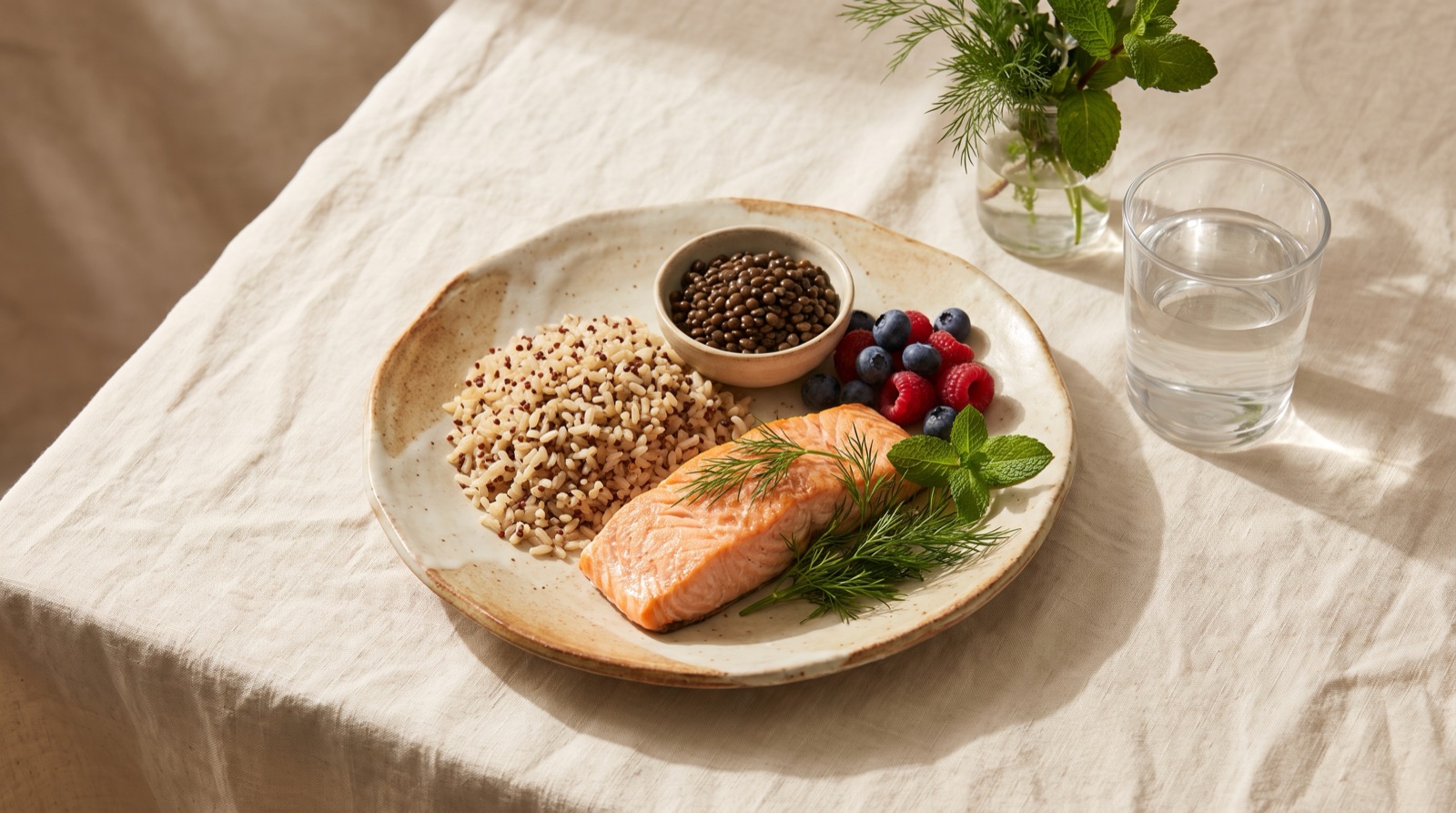
- Add fiber, slowly. Think vegetables, fruit, beans, lentils, oats, nuts, seeds, and whole grains. Aim to add a little more than yesterday. Go slow so your gut can adjust, and drink water along the way.
- Eat in a blood-sugar-friendly way. You do not have to cut out carbs. Instead, pair them with protein, healthy fat, or fiber. A piece of fruit with a handful of nuts. Rice with beans and veggies. This helps keep your blood sugar and insulin steadier through the day. (Our guide to blood sugar balance has more easy moves.)
- Choose whole foods most of the time. Meals built mostly from foods close to their natural form give your gut microbes more to work with. This is one of the most consistent themes across PCOS nutrition research (PMID: 36835989).
- Move your body in ways you enjoy. Walking, dancing, strength training, yoga. Movement helps your cells respond to insulin again, and it lifts your mood too. The best exercise is the one you will actually come back to.
- Protect your sleep. Short or poor sleep can worsen insulin resistance and stir up cravings. A steady bedtime is a real form of self-care, not a luxury.
Notice that none of these ask you to shrink your body or follow a strict diet. They ask you to add gentle, nourishing habits. That difference matters, especially with PCOS, where shame tends to backfire.
What about inositol?
You may have heard about a supplement called inositol (often the form called myo-inositol). Unlike many trendy supplements, this one has real research behind it for PCOS.
A large review that combined 26 randomized controlled trials, the gold standard of studies, including nearly 1,700 women, found that inositol helped more women get regular menstrual cycles and improved some markers of blood sugar and hormones compared with a placebo (a dummy pill). It also appeared to be well tolerated (PMID: 36703143).
That is genuinely encouraging, and our full guide to inositol for PCOS covers the more cautious reviews too. Still, a supplement is not a cure, and it is not right for everyone. Dose and form matter, and it can interact with your health history. Please talk with your doctor before starting inositol or any supplement, so it fits your specific situation.
You and your doctor, as a team
PCOS looks different in every woman. Some deal mostly with irregular periods. Others with acne, hair changes, weight, mood, or fertility questions. That is exactly why a one-size-fits-all plan does not work, and why your doctor is such an important partner.
Bring your questions. Ask about checking your blood sugar and insulin. Ask whether inositol or other options make sense for you. Share what you are already doing with food, movement, and sleep. You deserve care that treats you like a whole person, not a checklist.
Here is the hopeful truth: much about PCOS responds to steady, kind habits over time. You do not have to overhaul your life this week. Add one more serving of fiber. Take one more walk. Get to bed a little earlier. Small steps, repeated, are powerful. Your body is not the enemy here, and you are more in the driver's seat than you might think. (For more support, our hormones section is written for exactly this.)
References
- Escobar-Morreale HF. Polycystic ovary syndrome: definition, aetiology, diagnosis and treatment. Nat Rev Endocrinol. 2018. PMID: 29569621
- Sun Y, et al. Gut microbiota dysbiosis in polycystic ovary syndrome: Mechanisms of progression and clinical applications. Front Cell Infect Microbiol. 2023. PMID: 36909735
- Singh S, et al. Polycystic Ovary Syndrome: Etiology, Current Management, and Future Therapeutics. J Clin Med. 2023. PMID: 36835989
- Portincasa P, et al. Gut Microbiota and Short Chain Fatty Acids: Implications in Glucose Homeostasis. Int J Mol Sci. 2022. PMID: 35163038
- Cronin P, et al. Dietary Fibre Modulates the Gut Microbiota. Nutrients. 2021. PMID: 34068353
- Greff D, et al. Inositol is an effective and safe treatment in polycystic ovary syndrome: a systematic review and meta-analysis of randomized controlled trials. Reprod Biol Endocrinol. 2023. PMID: 36703143
This article is for education only and is not medical advice. PCOS is a medical condition. Please work with your doctor for diagnosis and a plan that is right for you. Research cited was retrieved from PubMed.
Common questions
Can changing my diet cure PCOS?
Changing your diet cannot cure PCOS. There is no cure for PCOS, and no food can make that claim. But eating more fiber, choosing whole foods, and pairing carbs with protein or fat can help support steadier blood sugar and insulin, which are often part of PCOS. Think of food as gentle support that works alongside your doctor's care, not a replacement for it.
What is the link between PCOS and the gut?
Early research shows that many women with PCOS have a different balance of gut bacteria than women without it. Scientists think this imbalance may be connected to insulin resistance and hormone changes seen in PCOS. This is still an emerging area, so it is one promising piece of the puzzle rather than the whole story.
Does inositol really help with PCOS?
Inositol has real research support for PCOS. A large review of 26 randomized controlled trials in nearly 1,700 women found that inositol (often the myo-inositol form) helped more women get regular cycles and improved some blood sugar and hormone markers compared with a placebo. Still, it is not a cure and not right for everyone. Talk with your doctor before starting it.
How much fiber should I add, and how fast?
Start small and build up slowly. Add a bit more than you usually eat, like an extra serving of vegetables, beans, or fruit each day, and drink plenty of water. Adding fiber too fast can cause bloating or gas, so give your gut time to adjust over a few weeks.
Do I need to lose weight to manage PCOS?
You do not necessarily need to lose weight to manage PCOS, and weight is not the whole picture. The habits that help most, like fiber-rich whole foods, blood-sugar-friendly meals, movement you enjoy, and good sleep, support your body no matter your size. Focus on adding nourishing habits rather than shrinking yourself, and let your doctor guide any weight-related questions.